Patient guide
Prosthetic legs after a diabetic amputation
Diabetes is the most common reason people in Pakistan lose a leg, and it shapes every part of the fitting: when the limb is ready, how the socket is made, how quickly you wear it in, and how closely the other foot must be watched.
At a glance
- Adults with diabetes in Pakistan
- About 34.5 million (IDF, 2024)
- First step
- Wound fully healed
- Biggest risk after fitting
- The other foot
- Usual first leg
- Below-knee, gentle socket
Can a diabetic amputee get a prosthetic leg?
Yes, most can, once the wound has fully healed, the swelling has settled and their doctor agrees. Diabetic limbs need gentler sockets, a slower wearing-in schedule and daily skin checks, and the remaining foot needs as much care as the limb that was lost.
Written and checked by the clinical team at Prosthetic Professionals. Last reviewed October 2026. General information only; your own surgeon or doctor decides when a limb is ready for fitting.
Why this matters so much in Pakistan
According to the IDF Diabetes Atlas, Pakistan has the highest prevalence of diabetes among adults aged 20 to 79 of any country, and the fourth largest number of adults with diabetes, about 34.5 million in 2024.
Diabetes damages nerves and blood vessels in the feet. A small wound that is not felt, or that heals slowly, can become an infection that ends in amputation. That is why so many people who come to us for a leg have diabetes, and why the same disease puts the other foot at risk.
None of this means a good result is out of reach. It means the fitting must be planned around the skin, the circulation and the other foot from the very first visit.
From healing to walking
Each stage takes a little longer with diabetes, and that is normal.
- 1
Let the wound close fully
Diabetic wounds heal slowly. Fitting a socket over a wound that is not fully closed risks reopening it.
- 2
Shape the limb
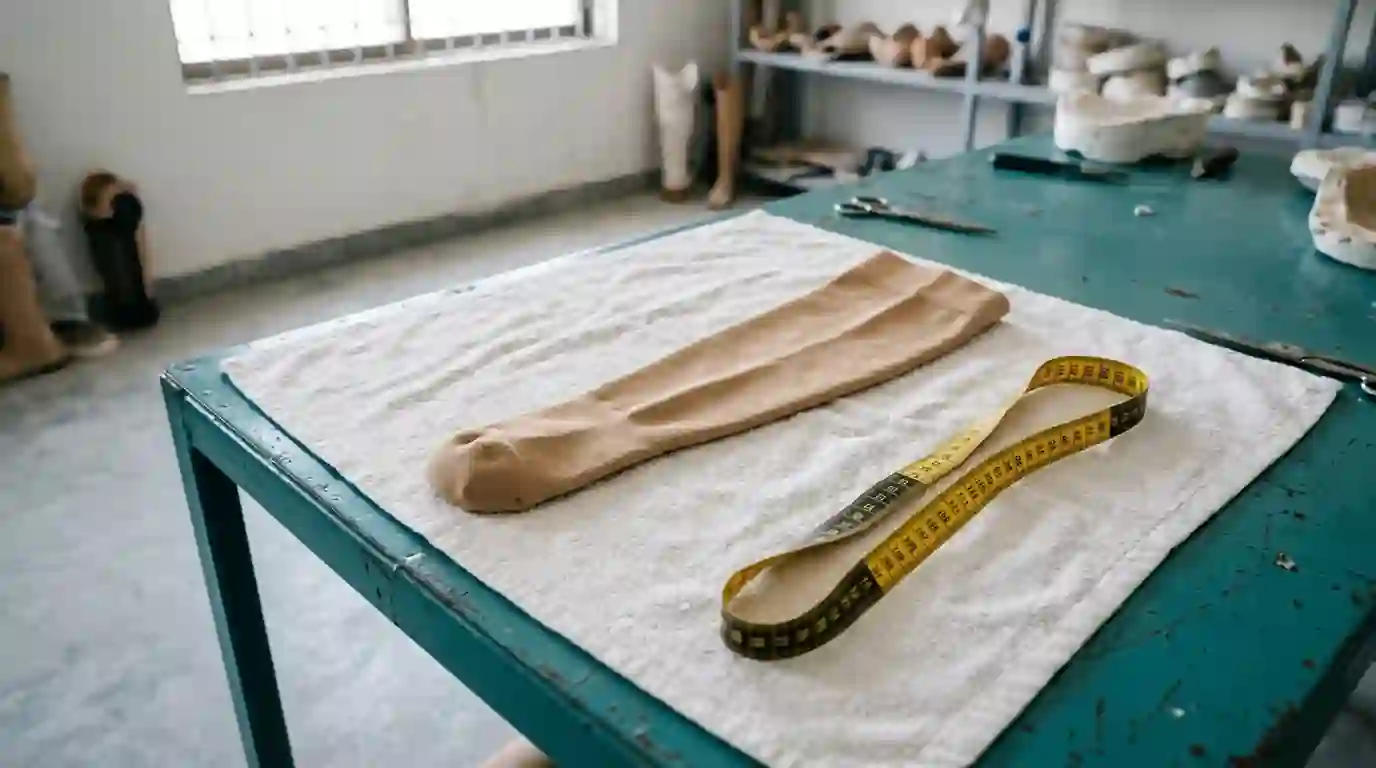
A shrinker sock, worn as the surgeon or physiotherapist advises, brings down the swelling and shapes the limb for casting.
- 3
Doctor's clearance
Your doctor confirms the wound, your sugar control and your heart are good enough to start.
- 4
Assessment of both feet
We check sensation, pulses and skin on the limb and on the other foot, and ask about your eyesight and hand strength.
- 5
A gentle socket
Soft liners and generous relief over bony areas spread the load, because damaged skin breaks down easily.
- 6
Slow wearing-in
Short periods at first, with a skin check every time the limb comes off, building up over two weeks or more.
Bring recent sugar readings to every visit. Sugar that runs high slows healing under the socket as well as at the wound.
Protect the other foot
After an amputation, the remaining foot carries more weight and is at higher risk. These four habits matter most.
Look every day
Check the sole, the heel and between the toes daily, with a mirror or a family member if needed.
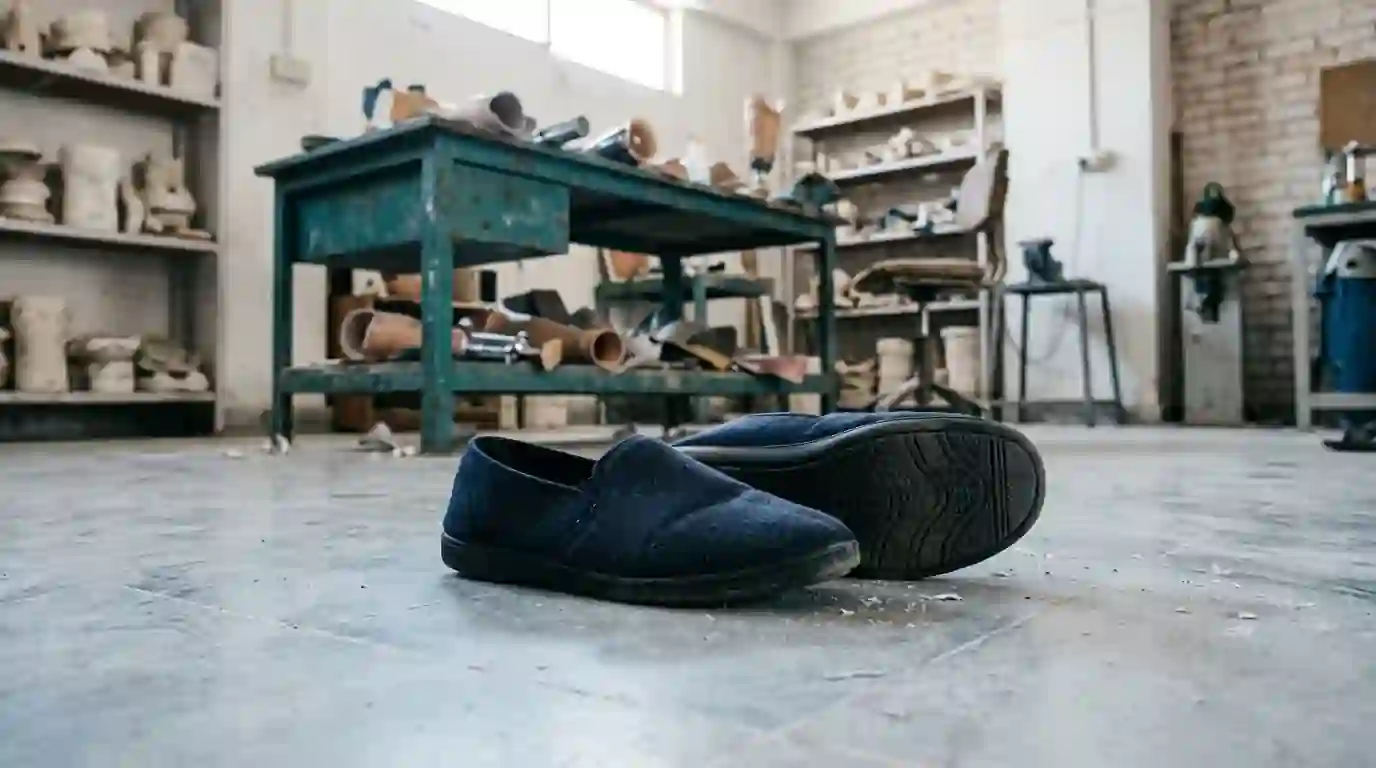
Never barefoot
Not at home, not in the bathroom, not on the prayer mat. Wear soft slippers or socks with grip.
Shoes that fit
Deep, wide shoes with a firm heel and no seams over pressure points, bought in the afternoon when feet are largest.
Act the same day
Any blister, cut, swelling or dark spot on the remaining foot needs a doctor the same day.
Warning signs and what to do
On the limb or on the other foot.
| What you notice | What it can mean | What to do |
|---|---|---|
| Redness that fades within twenty minutes | Normal pressure from the socket | Nothing; keep checking |
| Redness that lasts longer than twenty minutes | Too much pressure in one place | Rest the limb and call us |
| A blister or broken skin | Rubbing or pistoning in the socket | Stop wearing the limb and call us today |
| A dark or purple patch | Deep pressure damage | Stop wearing the limb and see your doctor |
| Swelling, heat, pus or fever | Infection | See your doctor the same day |
| New pain in the other foot | Overload or a poorly fitting shoe | Check the shoe and call us or your doctor |
Choosing a leg when you have diabetes
Light and simple usually wins. A lighter leg tires you less, and a simple suspension is easier to put on correctly every day.
If your fingertips are numb or your eyesight is poor, pin locks and fiddly liners can be hard to use safely. A sleeve or a strap you can manage alone is often the better choice, even if a liner looks more advanced.
Most people with diabetes start on a below-knee everyday or active build. See below-knee legs and partial foot and Syme's for smaller amputations.
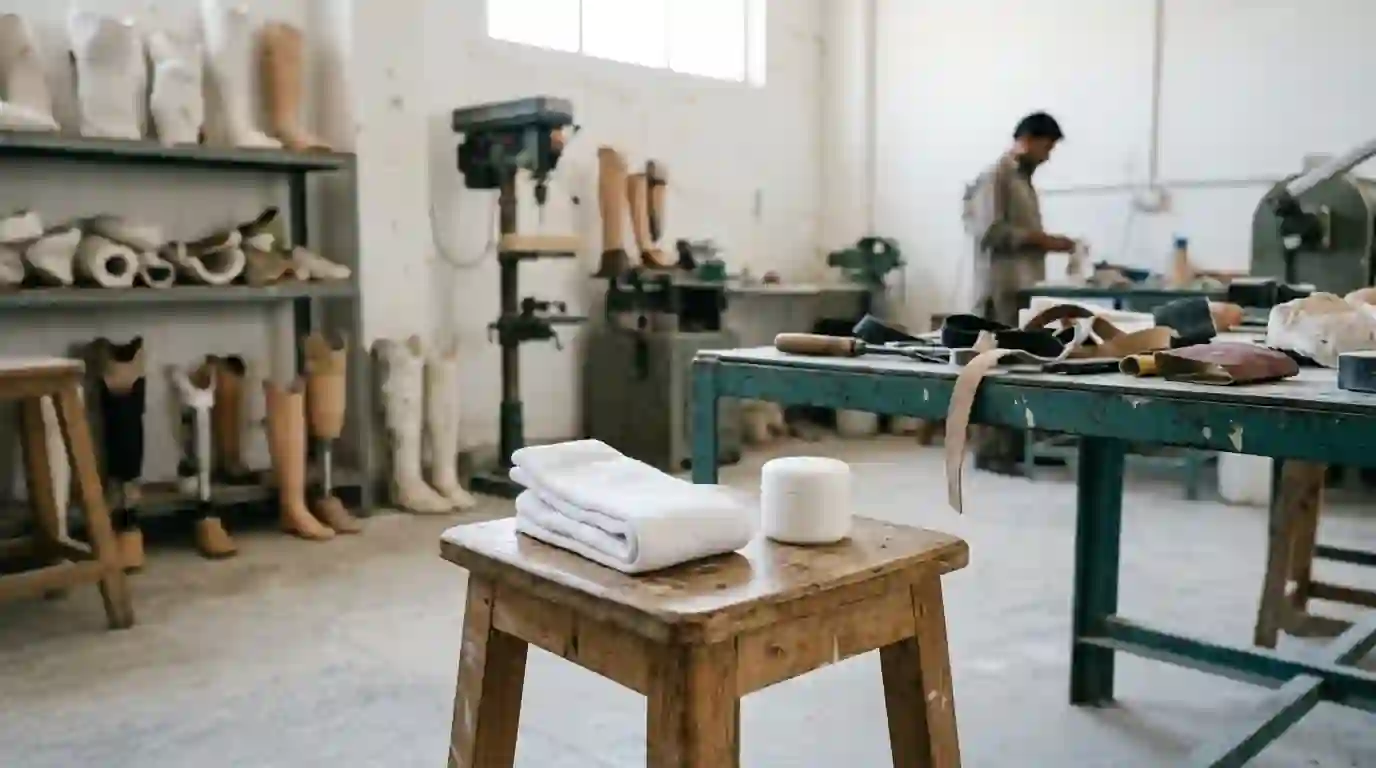
Everyday tools that help
Small things that prevent the most common problems.

Questions about diabetes and a new leg
Ask your own questionHow long after a diabetic amputation can I be fitted?
Often two to four months after surgery, sometimes longer, because diabetic wounds heal slowly. The wound must be fully closed and your doctor must agree before casting.
Will my sugar levels affect the fitting?
Yes. High sugar slows healing and makes skin more fragile under the socket. Steady control makes the fitting easier and the limb more comfortable.
I have lost feeling in my limb. Is a socket safe?
It can be, with care. Because you may not feel a sore starting, the socket is made with extra relief over bony areas and you, or a family member, check the skin every time the limb comes off.
Can I fast in Ramadan while getting a new leg?
Talk to your doctor first, because fasting changes sugar control. If you fast, plan fitting visits after iftar or early in the day, and keep wearing periods short while the skin adjusts.
Ask whether the limb is ready
Send photos of the limb and the other foot, your latest sugar readings and the surgery date. We will tell you whether it is time to start, and what to do first if it is not.