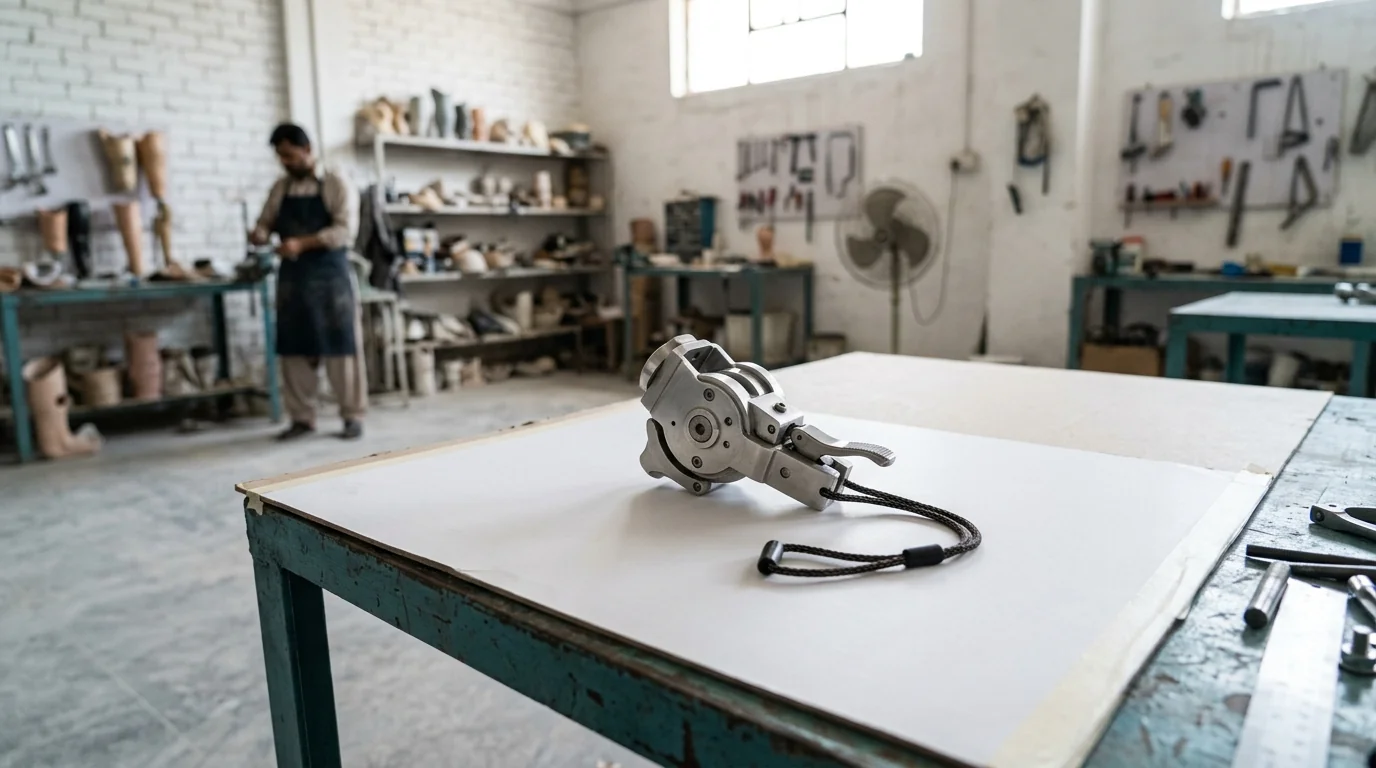
Locking knee
Stays locked straight while you walk and unlocks with a lever when you sit. The safest choice when balance is poor.
Best forOlder users, first legs, short walks at home
FromPKR 150,000
Transfemoral prostheses
An above-knee leg replaces the knee as well as the lower leg, so the knee joint you choose matters as much as the socket. We help you pick one you can trust on stairs, in crowds and on uneven ground.
At a glance
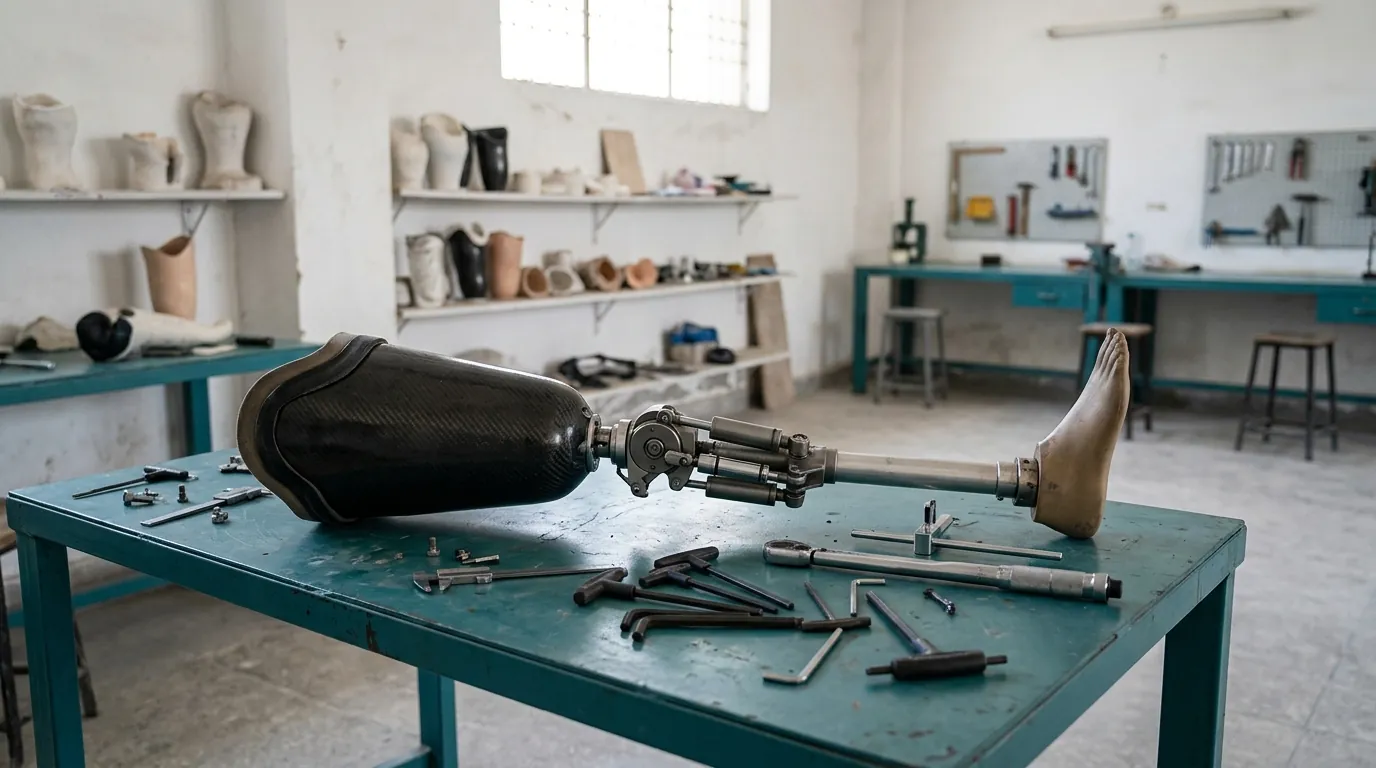
With a locking or single-axis knee and a cushioned-heel foot, an above-knee leg starts from PKR 150,000 (about US$540). Polycentric knees usually bring it to PKR 250,000 to 500,000, imported hydraulic knees to PKR 500,000 to 1,500,000, and microprocessor knees start around PKR 2,500,000.
Written and checked by the clinical team at Prosthetic Professionals. Last reviewed October 2026. General information only; your own surgeon or doctor decides when a limb is ready for fitting.
An above-knee, or transfemoral, prosthesis is for amputations through the thigh bone. Without your own knee, every step depends on the prosthetic knee staying straight when you put weight on it and bending when you swing the leg through.
Walking on an above-knee leg takes noticeably more effort than walking on a below-knee leg. That is why strength in the hip and trunk, and good balance on the other leg, matter as much as the parts.
Older users and people with heart or lung problems often do best with a simpler, more stable knee. Younger and more active users usually want a knee that lets them change speed.
Four families of knee cover almost everyone. Three are shown here; microprocessor knees have their own page.
Stays locked straight while you walk and unlocks with a lever when you sit. The safest choice when balance is poor.
Best forOlder users, first legs, short walks at home
FromPKR 150,000
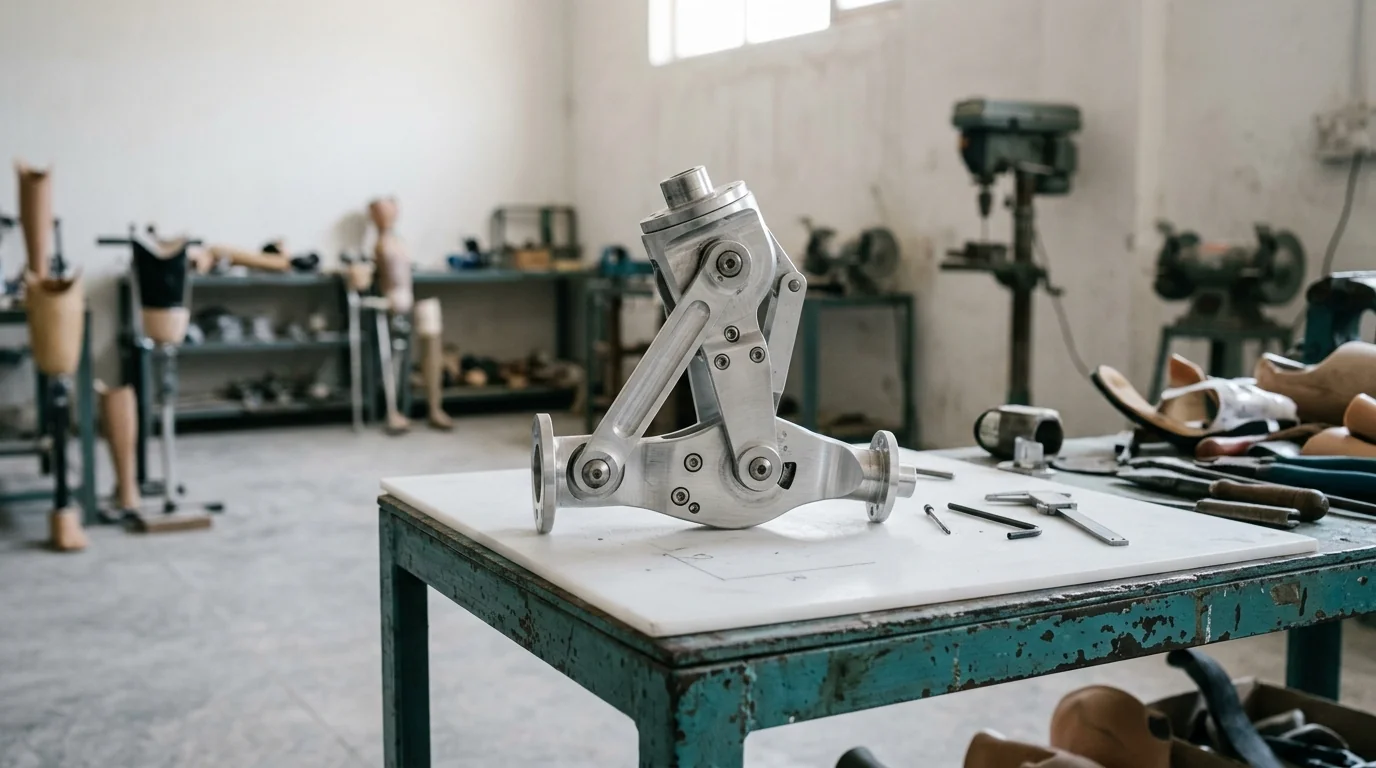
A four-bar linkage that is very stable when the heel lands and shortens slightly as it bends, so the toe clears the ground.
Best forEveryday walking outdoors and longer thigh limbs
FromPKR 250,000
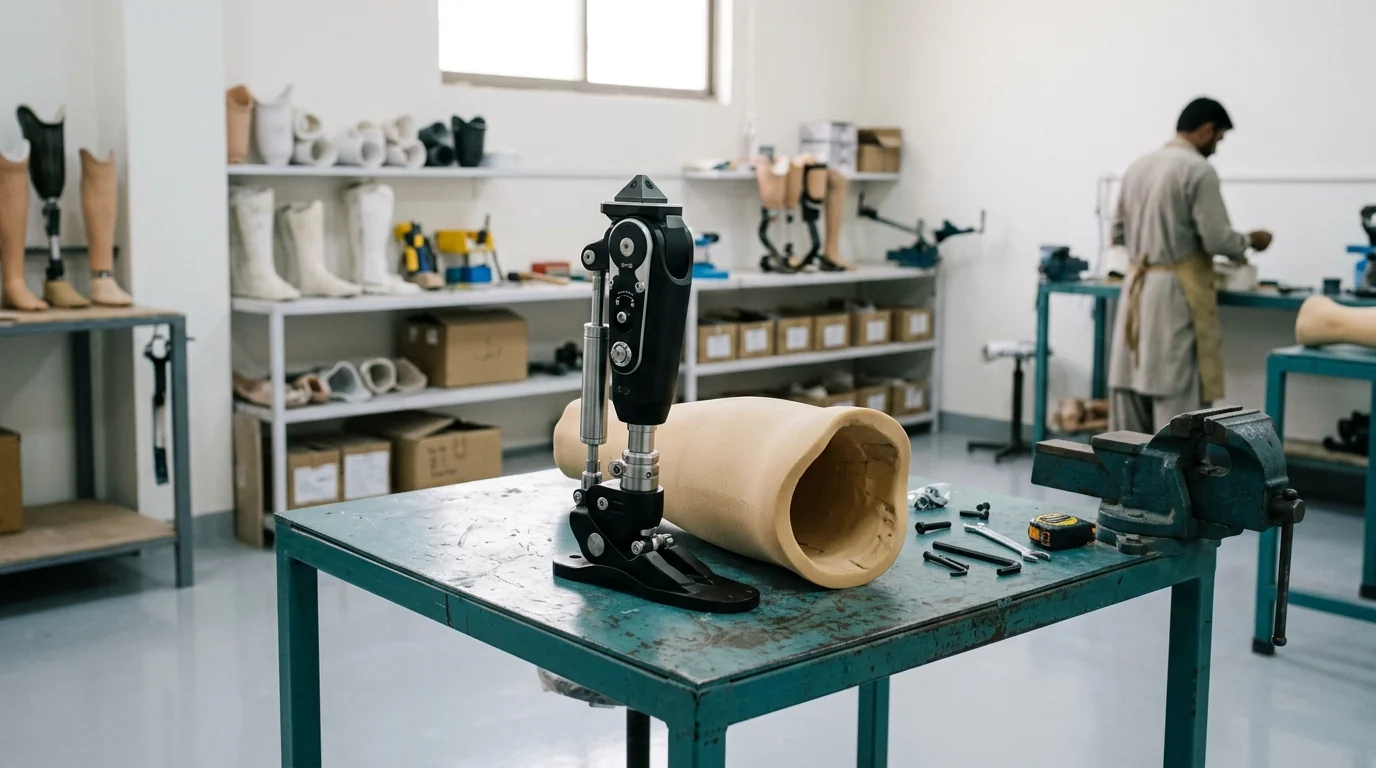
Oil cylinders control the swing, so the leg keeps pace when you walk faster or slower. Some also resist bending when you stumble.
Best forActive walkers who change speed, stairs, work on their feet
FromPKR 500,000
The knee joint is the biggest part of the price. The socket is made here for every build, from your own cast.
| Build | What it usually includes | Typical range (PKR) | From (US$) |
|---|---|---|---|
| Everyday build | Cast socket, locking or single-axis knee, cushioned-heel foot | 150,000 to 240,000 | about 540 |
| Polycentric build | Ischial containment or suction socket, polycentric knee, dynamic foot | 250,000 to 500,000 | about 900 |
| Hydraulic build | Imported hydraulic knee, silicone liner or seal-in socket, carbon foot | 500,000 to 1,500,000 | about 1,800 |
| Microprocessor build | Computer-controlled knee with a premium socket and foot | 2,500,000 and up | about 9,000 |
Knee prices dominate. Your old knee can often be reused if it is sound. Converted at about PKR 278 to the US dollar, October 2026.
See every pricePlan on three to four weeks in Karachi for a first above-knee leg, mostly for training.
A short video of you walking with crutches or an old leg tells us a lot about which knee will suit you.
We check hip strength and movement, balance, the skin around the groin and the length of the thigh.
The thigh is cast while you stand in a casting frame, so the socket carries weight through the right part of the pelvis.
We check comfort when standing, walking and sitting, and adjust the edge at the groin until it stops pinching.
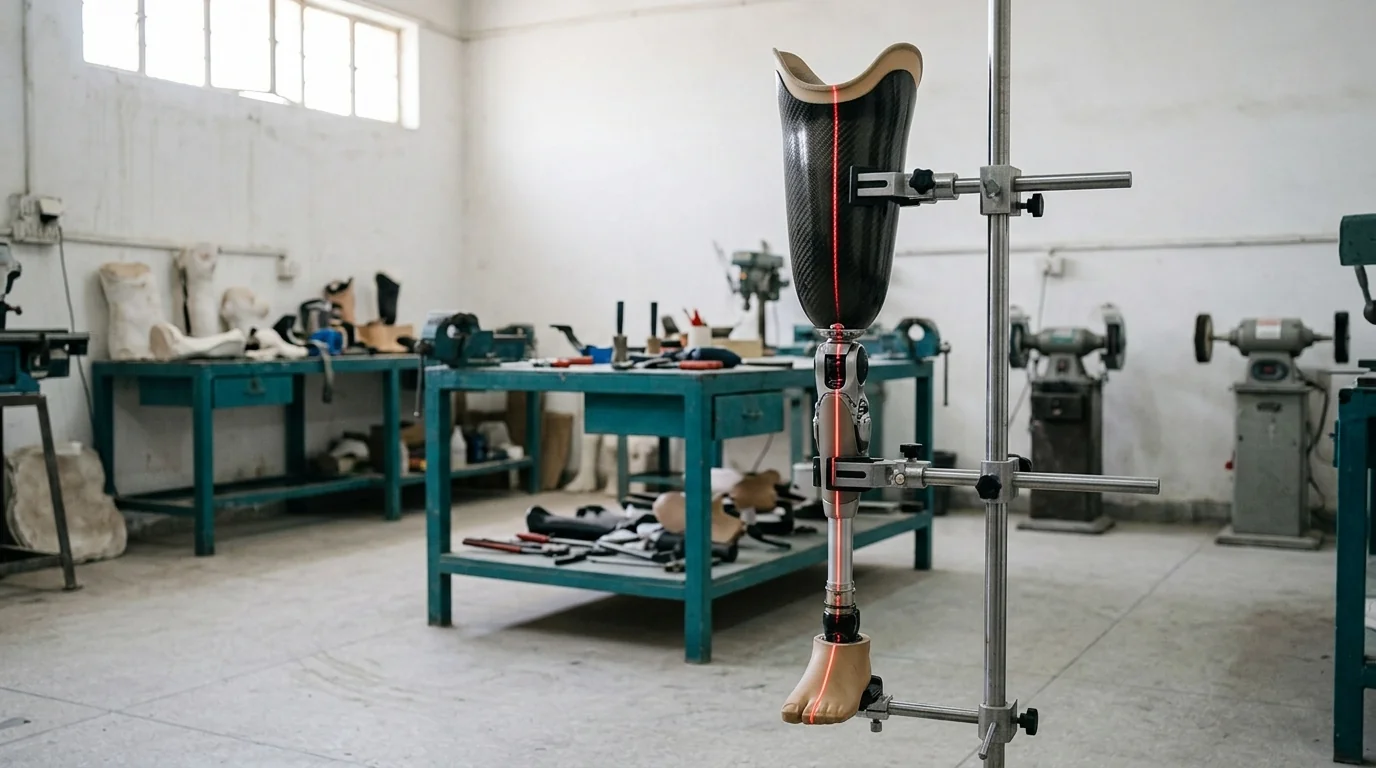
The knee is placed against a laser line so it stays straight under load, then tuned while you walk.
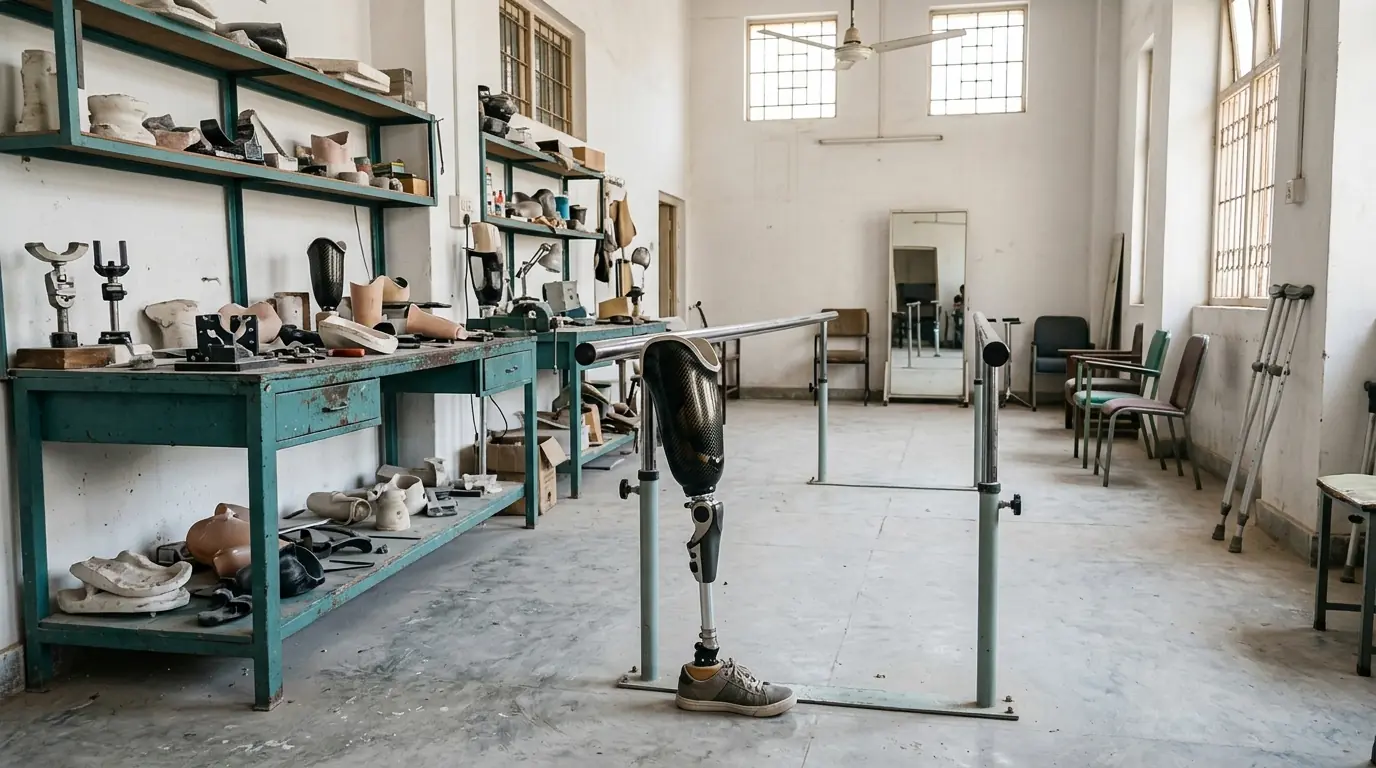
Sitting down and standing up, walking in the bars, turning, stairs one step at a time, slopes, and getting up from the floor.
Learning to get up from the floor after a fall is part of training, not an extra.
Sitting is where above-knee users notice the socket most. The rim sits high on the thigh, so we shape it to be comfortable on a chair, in a car and, where possible, on the floor.
For prayer and sitting cross-legged, a rotation adapter above the knee lets the lower leg turn outwards without taking the leg off, and some knees bend further than others. Tell us how you pray and how you sit at home so we can plan for it.
Stairs are usually taken one step at a time, leading up with the sound leg and down with the prosthesis. Hydraulic and microprocessor knees let some users come down step over step.
Usually a locking knee or a stable single-axis knee. It feels slower, but it does not buckle. We would rather see someone walk safely with a locked knee than fall on a free one.
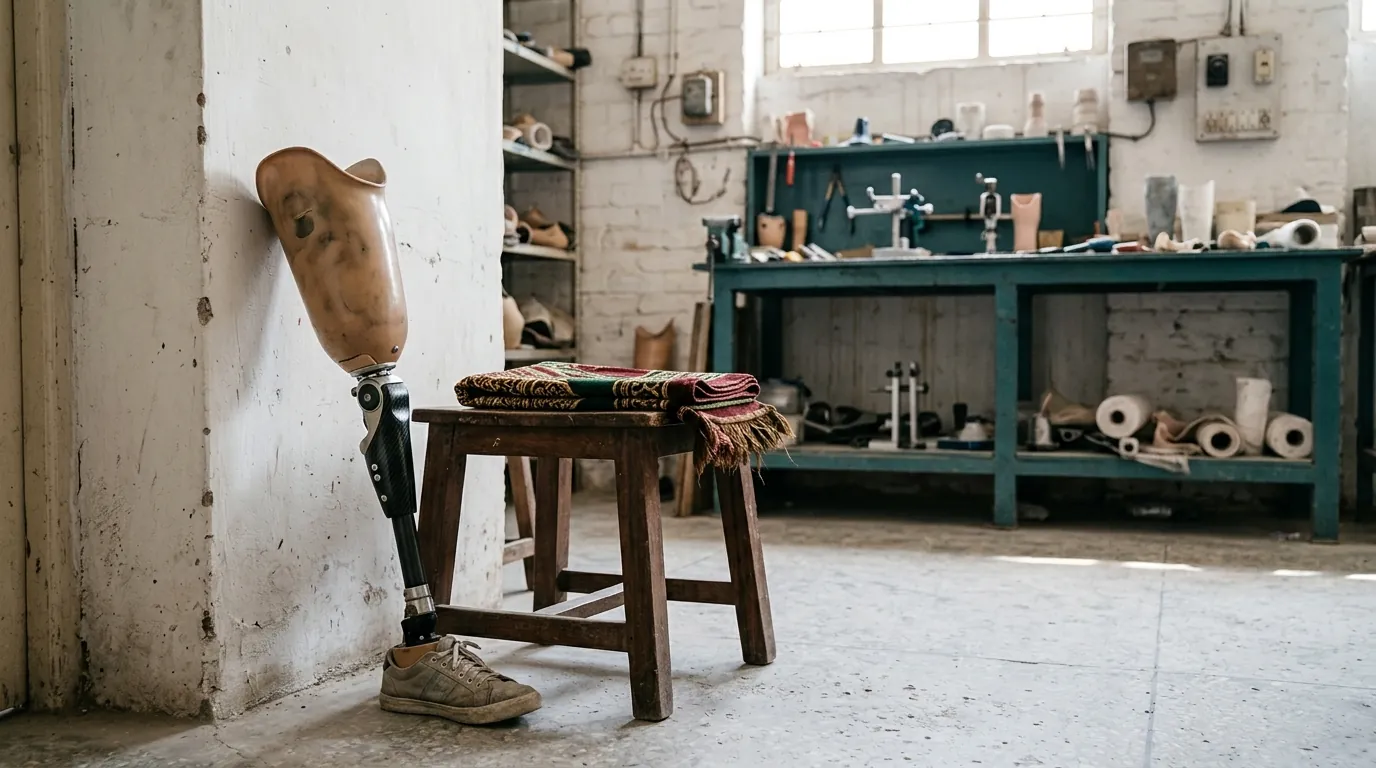
Many users pray seated on a chair, which is a recognised option. Others use a rotation adapter and a knee that bends further so they can sit on the floor. We plan the socket rim and parts around the way you pray.
For a young, active user who walks long distances on uneven ground, it can reduce falls and effort. For someone who walks mostly at home, a good mechanical knee is usually a better use of the money. Our microprocessor knee page explains the trade-off.
Longer than for a below-knee leg. Expect daily sessions for one to two weeks once the final leg is ready, then practice at home. People who have used a leg before usually need less.
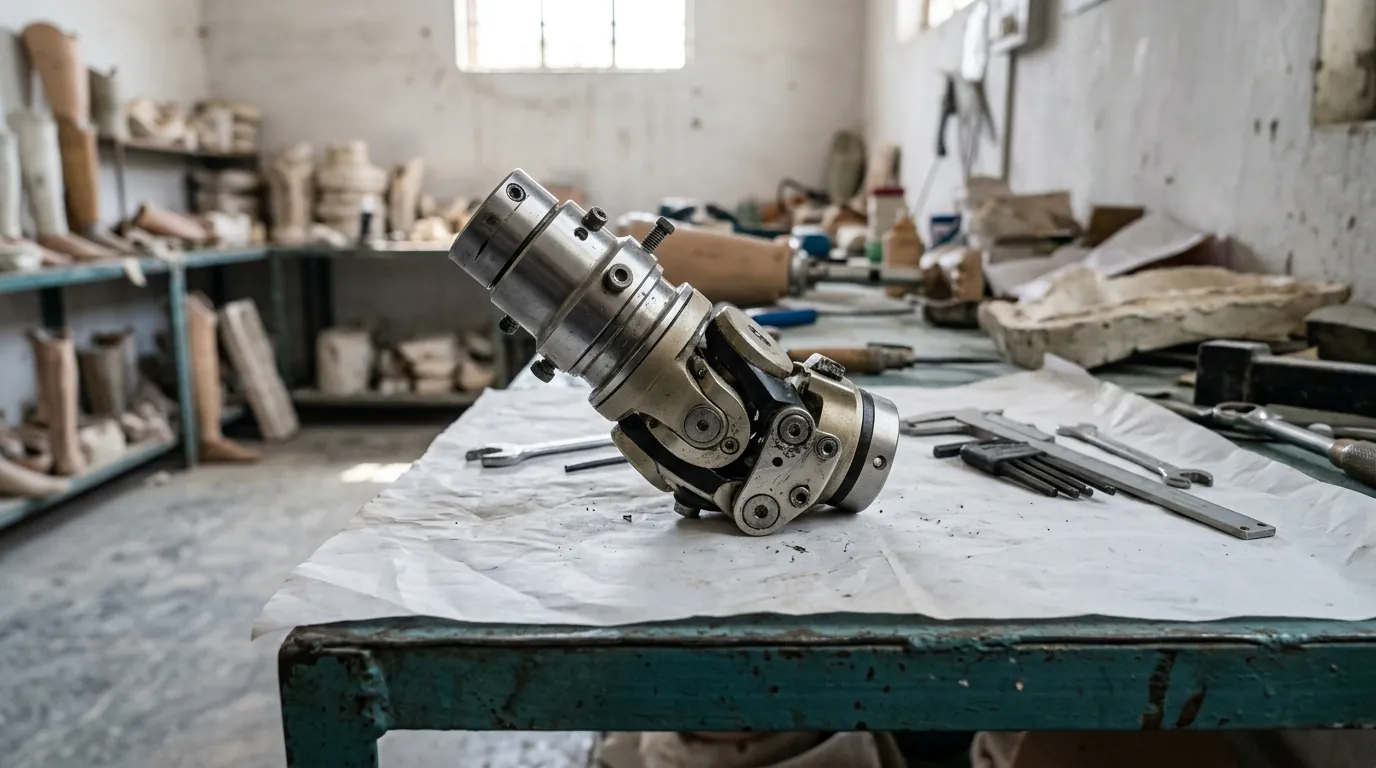
Often, yes, if the knee still works smoothly and the bolts and adapters are sound. We test it on the bench and on a walk before deciding.
Send a short video of walking with your current leg or with crutches. It tells us more about the right knee than any brochure.