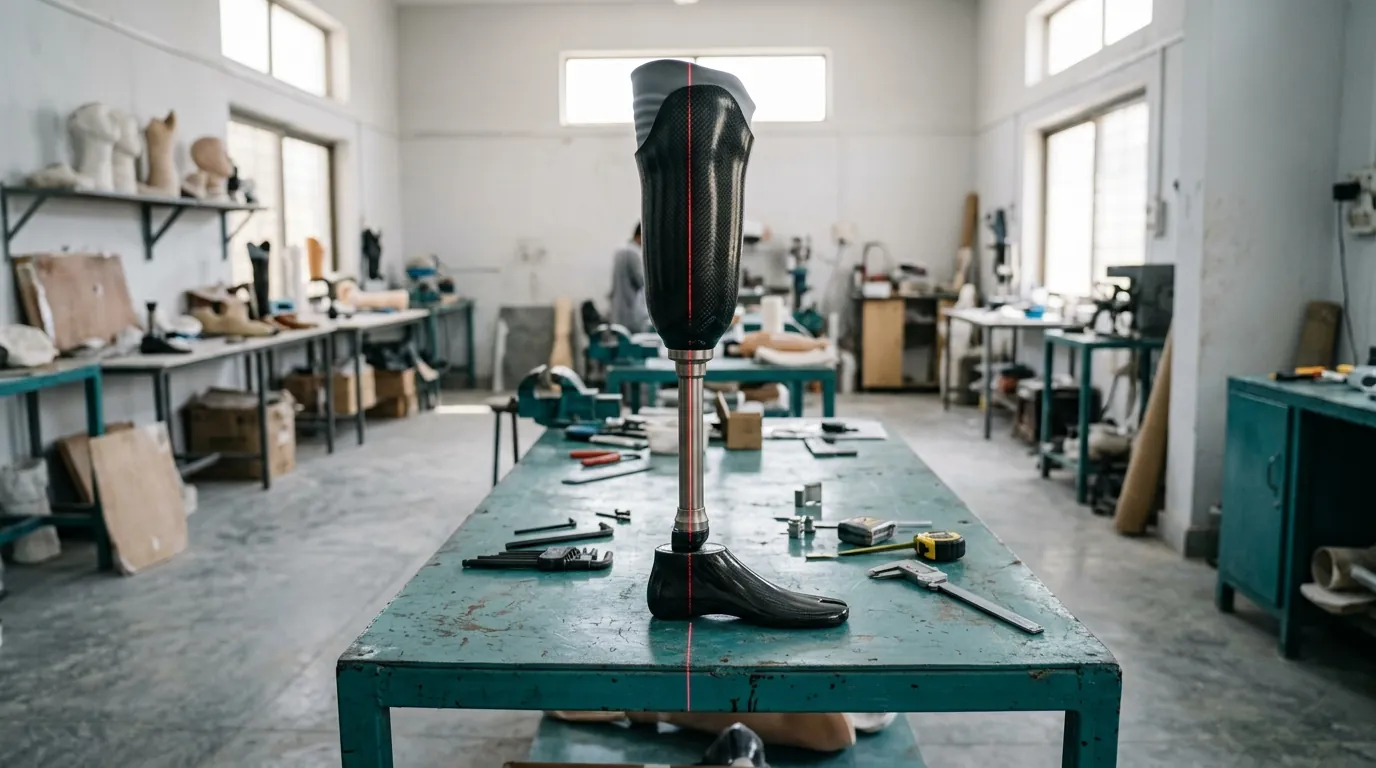
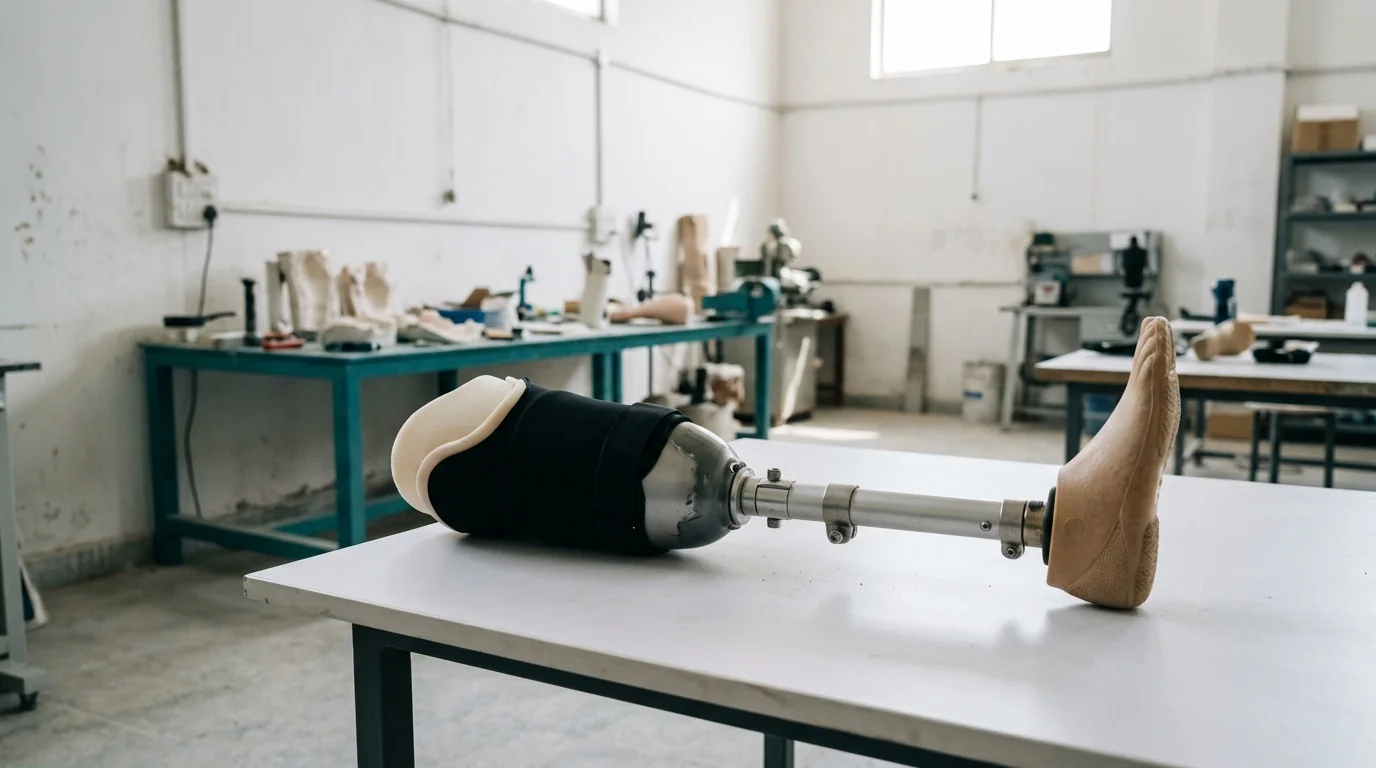
A below-knee leg is the prosthesis we make most often. When the socket fits well, most people walk steadily on it after a short period of training, and many go back to work, prayer and long days on their feet.
What does a below-knee prosthetic leg cost at your clinic?
An everyday build with a cast socket, a cushioned-heel foot and walking training starts from PKR 80,000 (about US$290). An active build with a silicone liner and a dynamic foot usually costs PKR 150,000 to 350,000, and imported premium builds run from PKR 350,000 upwards.
Written and checked by the clinical team at Prosthetic Professionals. Last reviewed October 2026. General information only; your own surgeon or doctor decides when a limb is ready for fitting.
Who a below-knee leg is for
A below-knee, or transtibial, prosthesis is for anyone whose amputation is between the knee and the ankle. Because your own knee still bends, a below-knee leg asks far less energy of you than a leg that has to replace the knee as well.
In Pakistan the most common causes are diabetes and blocked arteries, road and work accidents, and infections that would not heal. The cause matters less than the limb itself: its length, the shape of the bone end, the scar and the strength of the thigh all shape the socket we make.
A longer limb gives more leverage and an easier fit. A short limb can still walk well, but it needs closer attention to suspension so the leg does not slip with each step.
Your wound has closed and your surgeon is happy
The swelling has settled, usually helped by a shrinker sock
You can stand and balance on the other leg, with support if needed
Three ways to build a below-knee leg
The socket is always made from your own cast. What changes between builds is how the leg holds on and how the foot behaves.
Everyday build
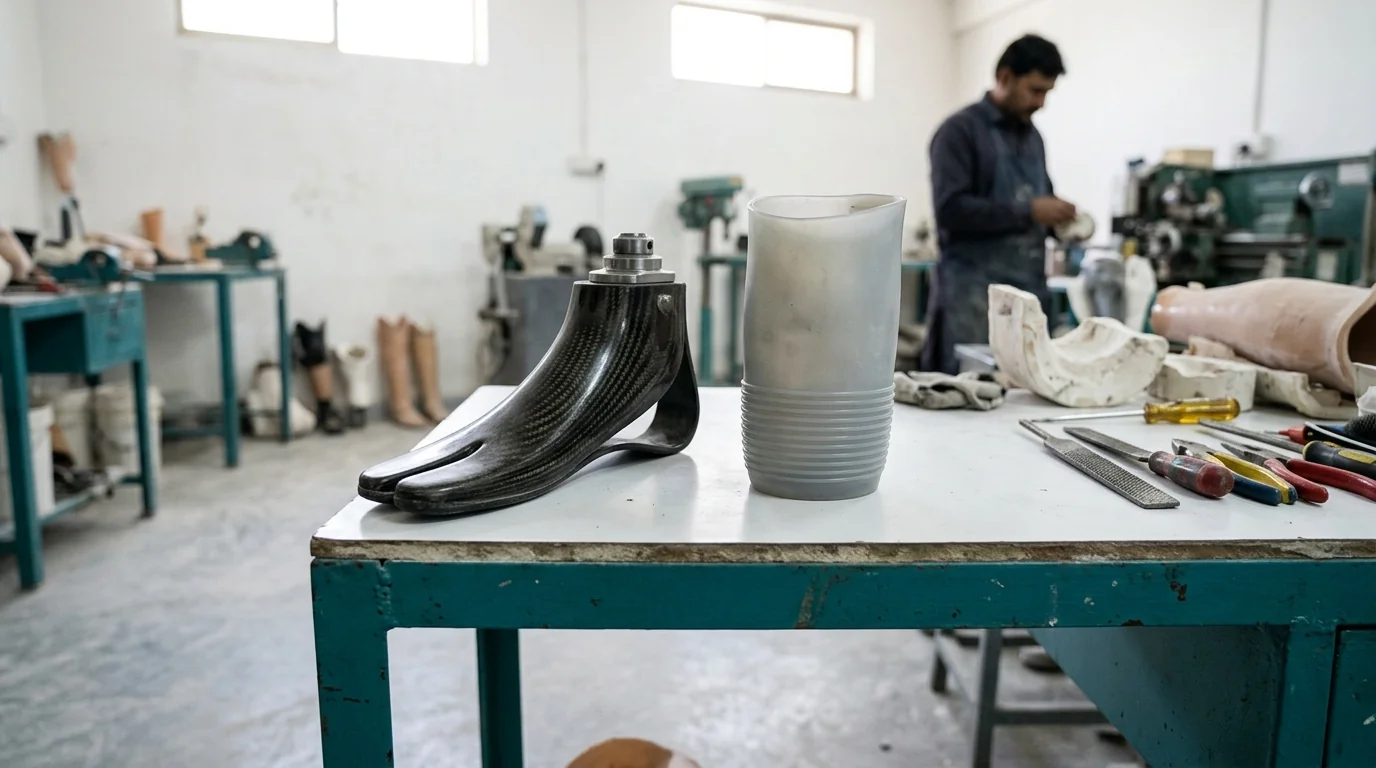
A patellar tendon bearing socket with a soft insert, held on by a sleeve or a cuff strap, on an aluminium pylon with a cushioned-heel foot. Simple, strong and easy to repair.
Best forWalking at home and in the neighbourhood, first legs, tighter budgets
FromPKR 80,000
Active build
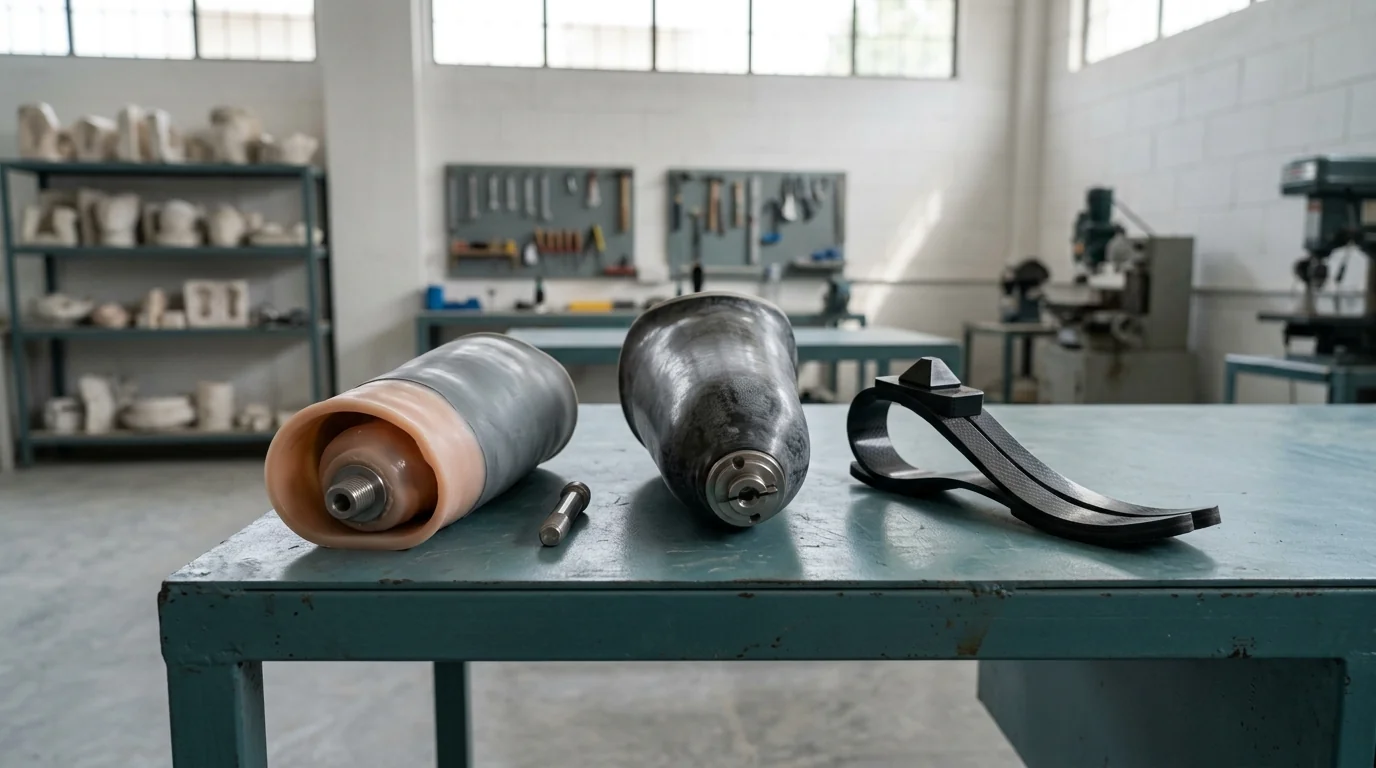
A total-contact socket worn over a silicone liner with a pin lock, and a dynamic foot that rolls over more naturally on uneven ground.
Best forDaily work, longer walks, stairs and slopes
FromPKR 150,000
Premium imported build
A seal-in liner or vacuum suspension and an energy-storing carbon foot from an imported maker, for a closer, steadier connection.
Best forVery active users, long distances and sport
FromPKR 350,000
Below-knee leg prices
Ranges cover the leg and the walking training. The exact figure depends on your limb, the parts you choose and how many socket changes are needed.
Most stages happen in the clinic over two to three weeks. The first one happens on WhatsApp, before you travel.
1
Photos and history on WhatsApp
Send photos of the limb, the amputation date and any old leg. We say which build is likely and give a first estimate.
2
Assessment
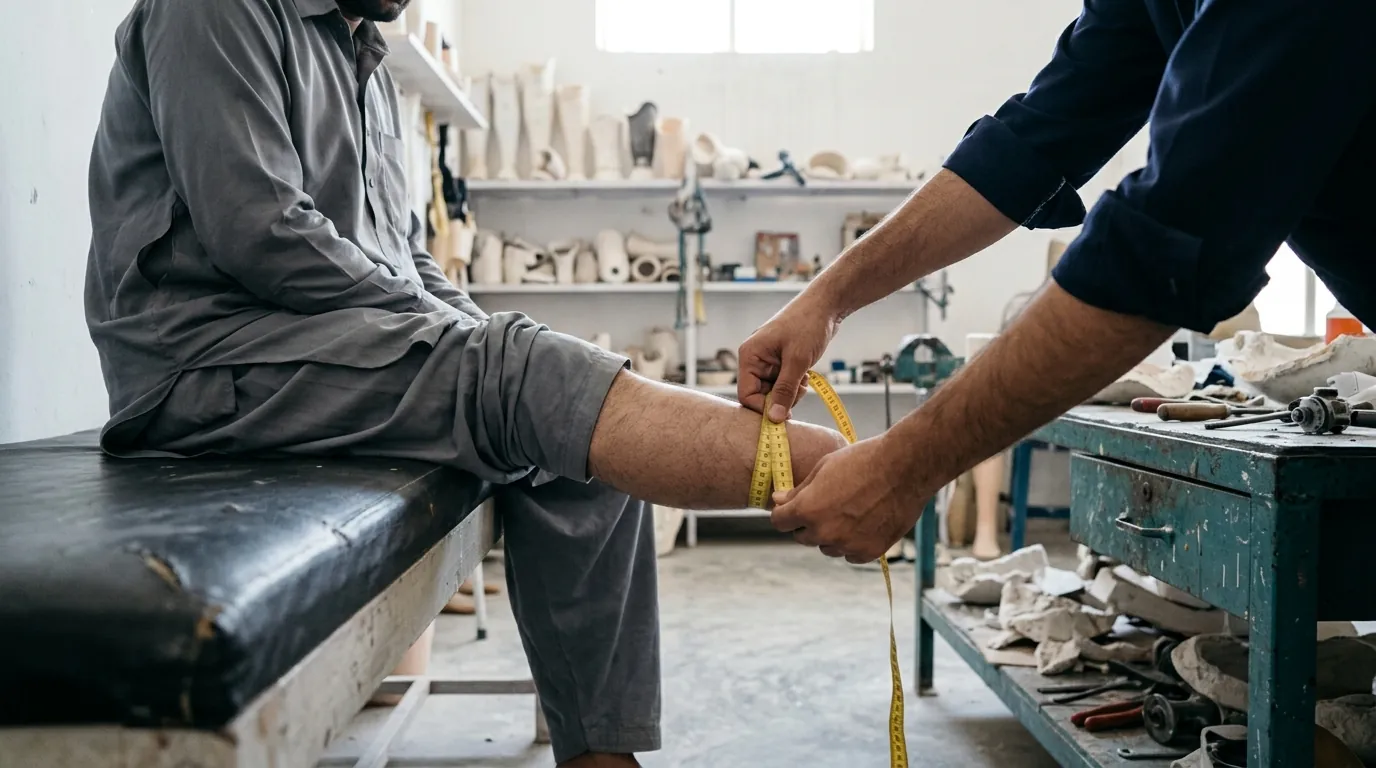
We check the skin, the scar, the bone end, knee movement and thigh strength, and ask how you spend your day.
3
Cast
A plaster cast of the limb is taken with the knee slightly bent, the position it holds inside the socket.
4
Test socket
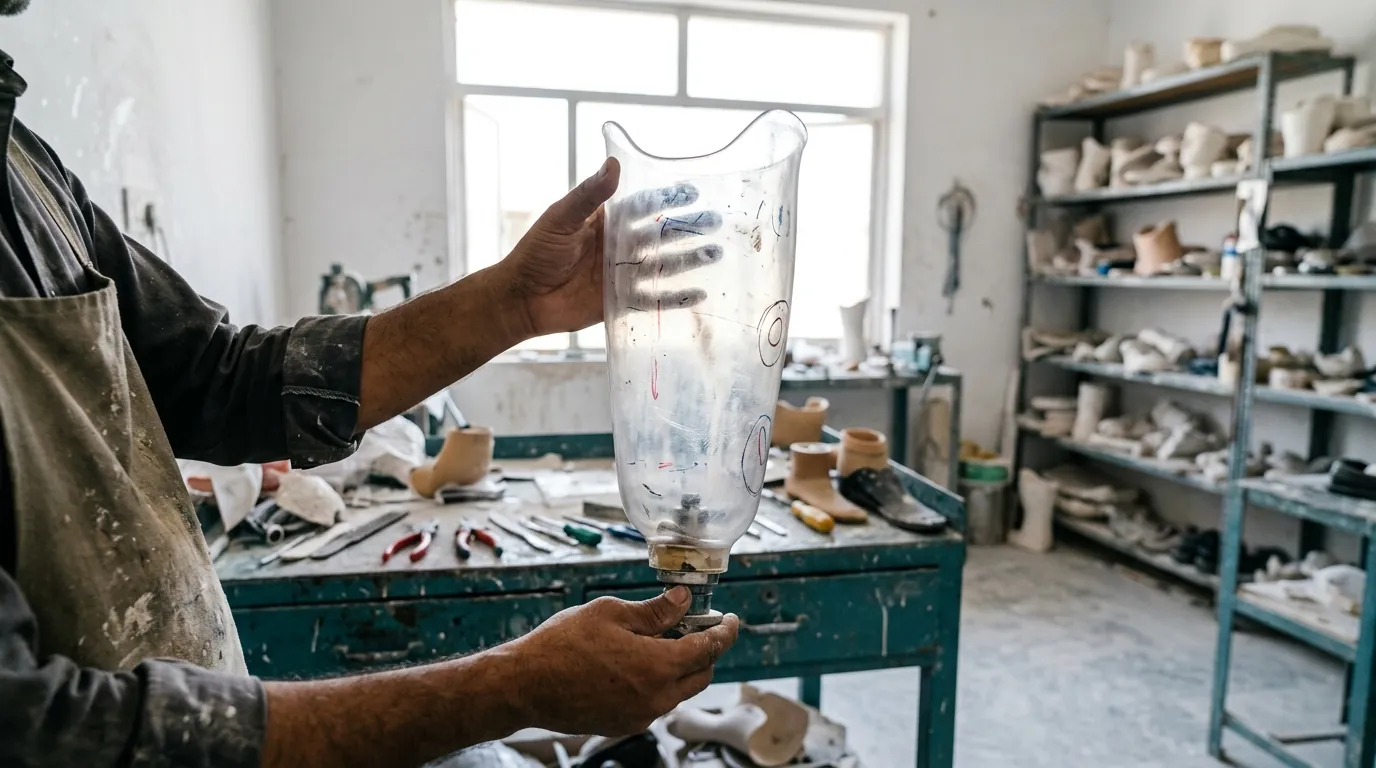
You stand and take steps in a clear test socket. Pressure shows as pale patches, and we reshape until the load sits where it should.
5
Final leg and laser alignment
The finished socket is joined to the pylon and foot, then lined up with a laser so the knee tracks straight over the foot.
6
Walking training
Weight shifts, then the parallel bars, then steps, slopes and turns, until you leave walking steadily with or without a stick.
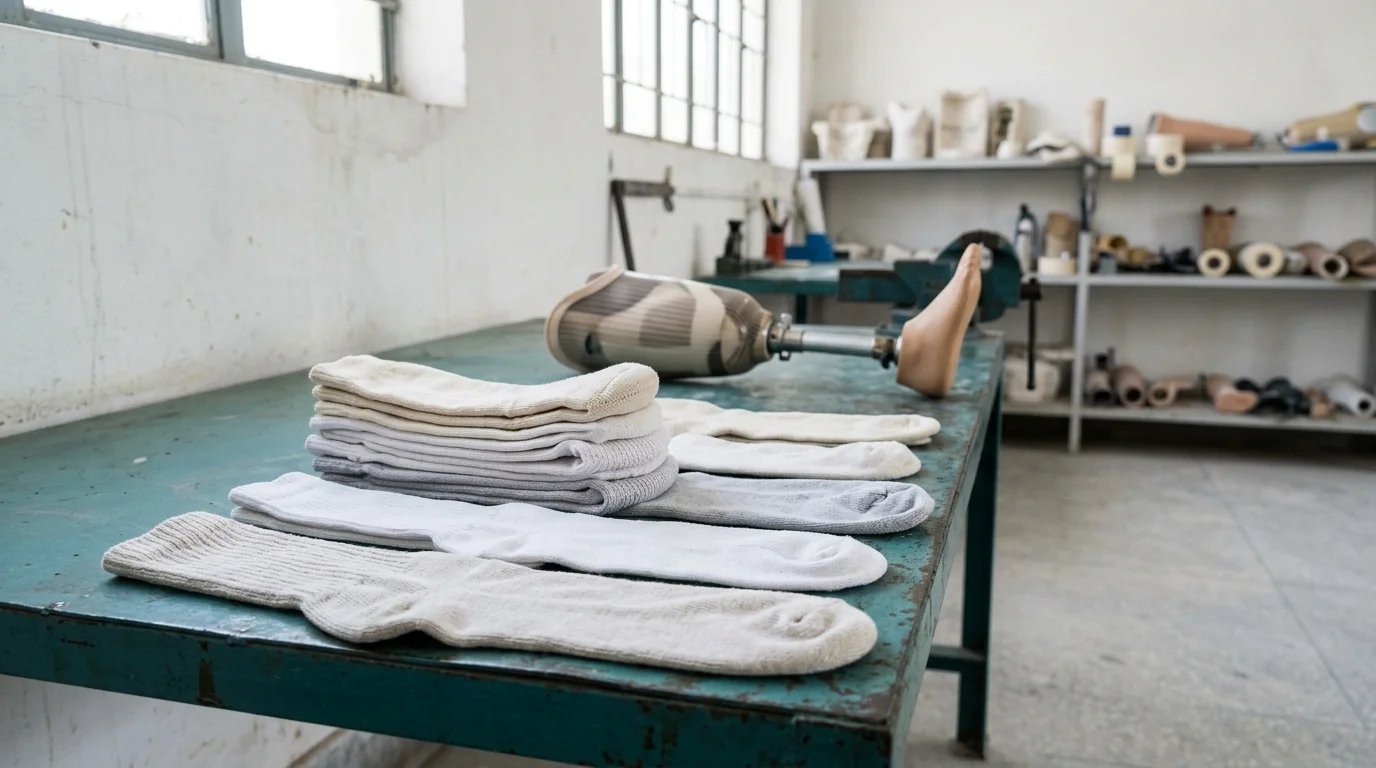
After you go home the limb keeps shrinking for months. Socks of different thickness take up the space; tell us if you need more than a few to stay snug.
Living with a below-knee leg in a hot climate
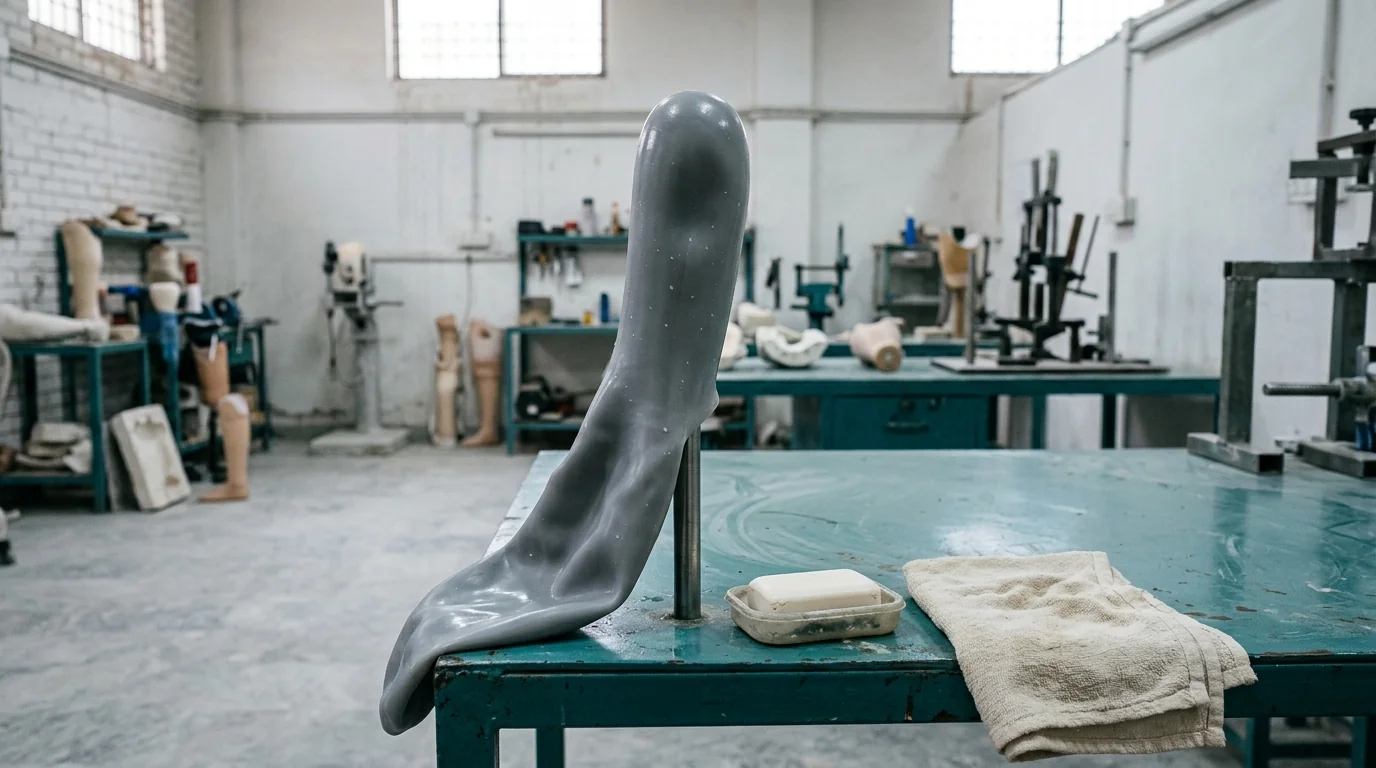
Heat and sweat are the everyday problem in Karachi and across the Gulf. A silicone liner should be washed every evening with mild soap and water, rinsed well and left to dry inside out.
Check the skin each night. Redness that fades within twenty minutes of taking the leg off is normal; redness that stays, a blister or a dark patch is a reason to call us before it becomes a sore.
Socks are how you keep the fit right as the limb changes through the day. Add a thin sock when the leg feels loose and take one off if it pinches. Needing many more socks than before usually means it is time for a new socket.
Wash the liner daily and let it dry fully
Keep a spare liner if you can, so one is always dry
Look at the skin each night, or ask a family member to
Book a check every six months, or sooner if anything rubs
Usually once the wound has fully closed and the swelling has gone down, which for many people is somewhere between six weeks and three months after surgery. Diabetic wounds can take longer. Your surgeon decides when the limb is ready; we decide what kind of leg suits it.
How long does a below-knee leg last?
The parts often last three to five years with normal care. The socket usually needs replacing sooner, because the limb shrinks and changes shape, especially in the first year or two after the amputation.
Will I walk without a stick?
Many below-knee users do once training is finished and their balance is good. People who were unsteady before the amputation, or who have problems in the other leg, often keep a stick for longer walks, and that is a sensible choice.
Can the leg look like a real leg under clothes?
Yes. A foam cover shaped to match the other calf and a skin-tone stocking can be added over the pylon, so the leg looks natural under trousers or shalwar.
Can I kneel or sit on the floor with a below-knee leg?
Kneeling is possible, but the back of the socket can press behind the knee when you fold it fully. If you sit on the floor or pray in the usual way, tell us at the assessment and we will trim and shape the socket with that in mind.