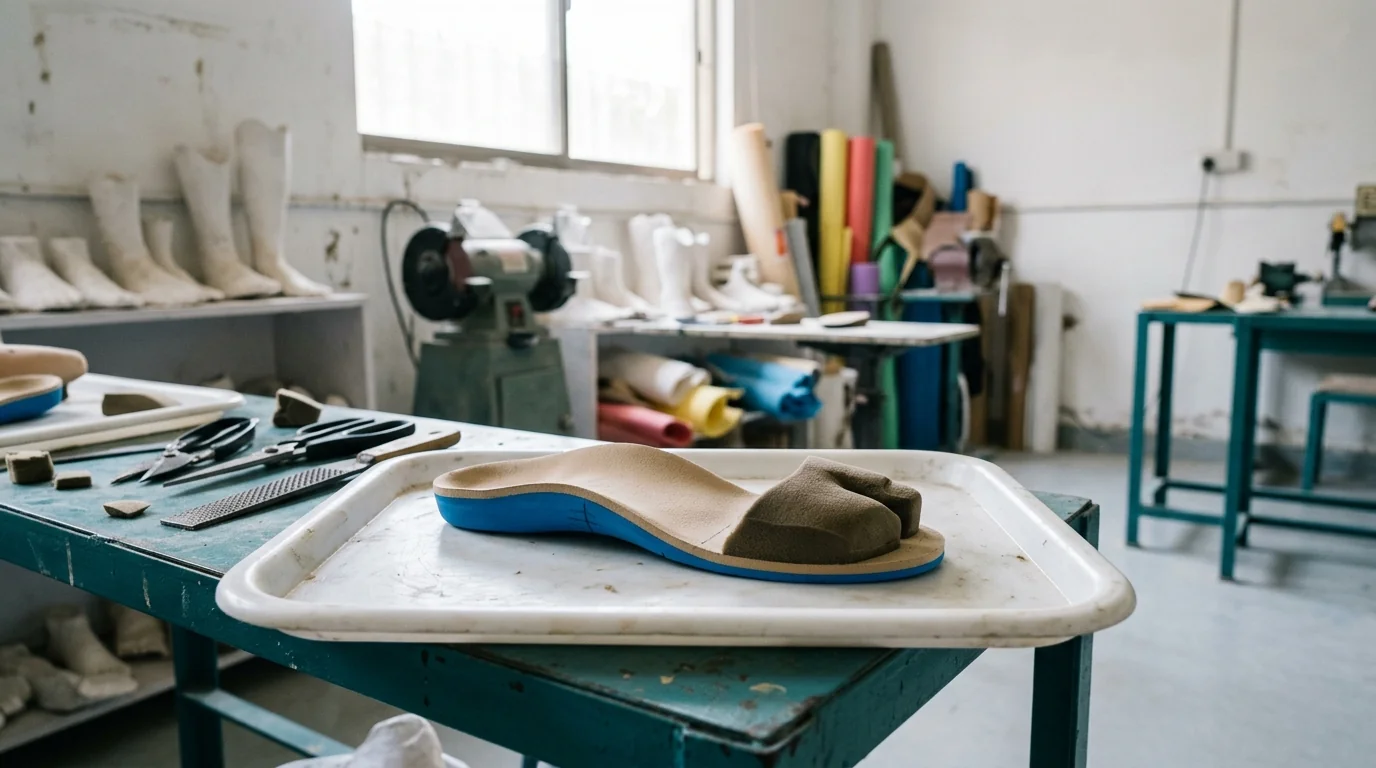
Toe filler and insole
A shaped filler on a moulded insole that fills the empty part of the shoe and spreads pressure across the sole.
Best forSingle toes, several toes, small forefoot losses
FromPKR 10,000
Toe, forefoot and ankle level
Losing toes or part of the foot changes how weight travels through the foot and how shoes fit. The right filler, silicone foot or Syme's limb protects the skin you still have and keeps your step even.
At a glance
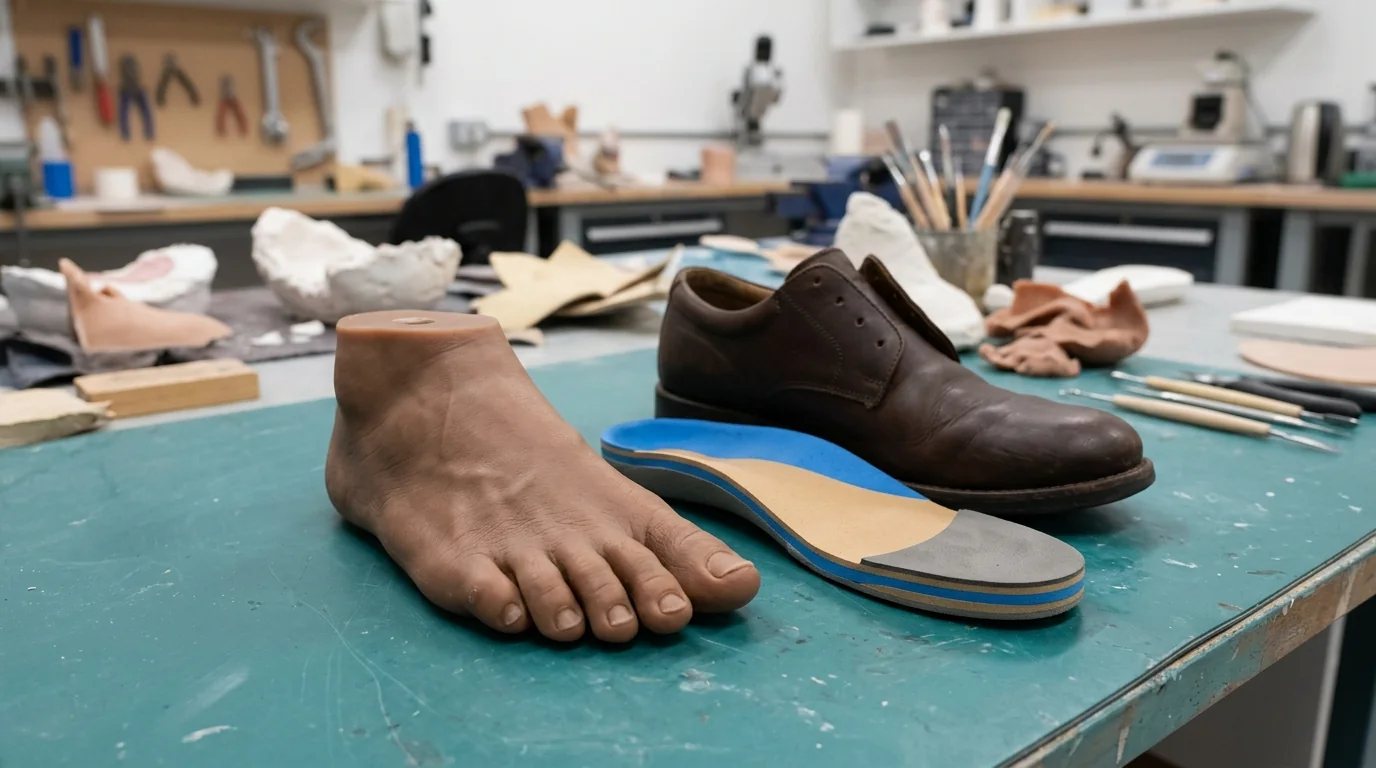
Often a simple toe filler in a well-fitting shoe is enough, starting from PKR 10,000. Larger forefoot losses usually need a silicone partial foot from PKR 25,000 or a carbon footplate, and a Syme's ankle amputation needs a full limb from PKR 110,000.
Written and checked by the clinical team at Prosthetic Professionals. Last reviewed October 2026. General information only; your own surgeon or doctor decides when a limb is ready for fitting.
Partial foot amputations range from a single toe to the whole front of the foot. They are common after diabetic wounds and infections, and after crush injuries at work or on the road.
The smaller the loss, the simpler the device. But even a missing big toe changes balance at push-off, and an empty shoe toe lets the foot slide forward and rub. A filler or partial foot keeps the foot where it should be.
A Syme's amputation goes through the ankle and keeps the heel pad, so the end of the limb can take your weight. The end is wider than the ankle above it, so the socket needs a window or a flexible inner liner to slide past it.
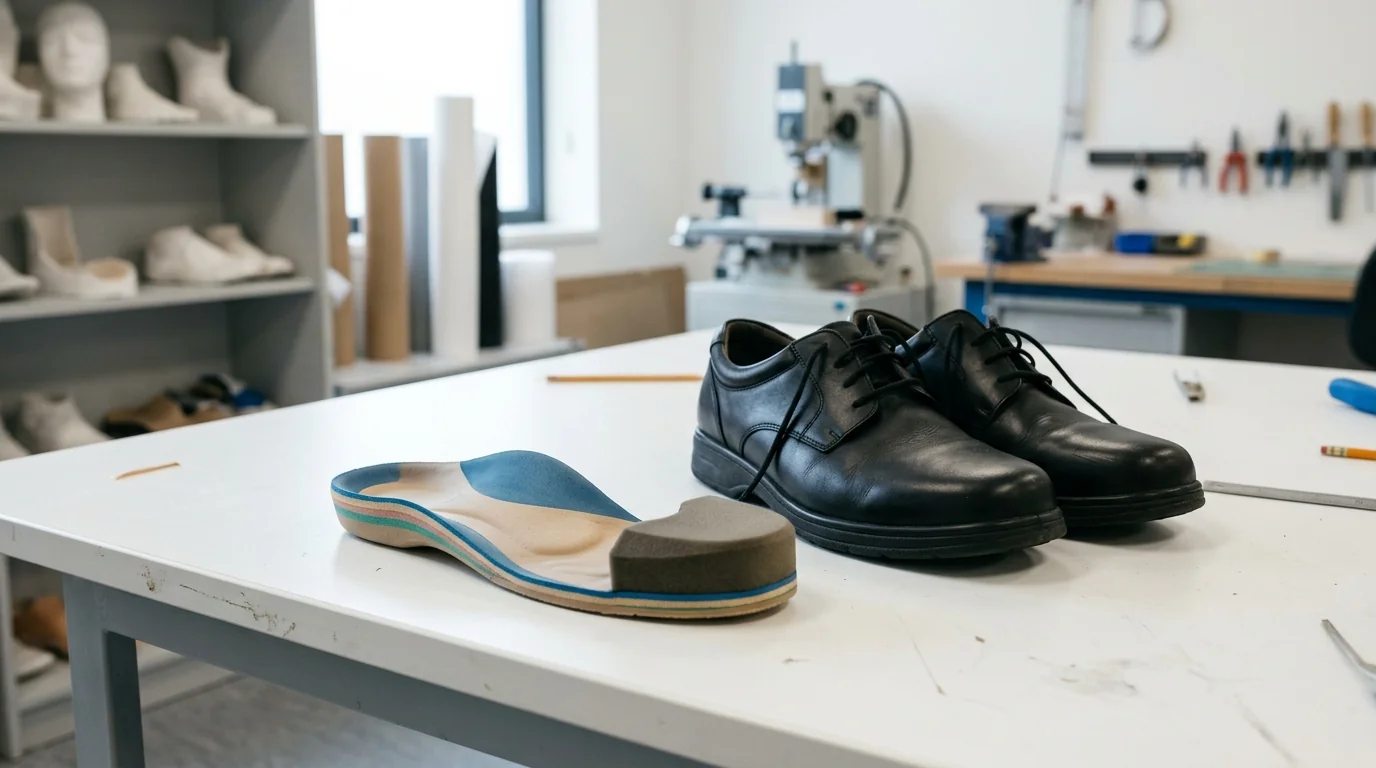
Most people at this level need one of these three.
A shaped filler on a moulded insole that fills the empty part of the shoe and spreads pressure across the sole.
Best forSingle toes, several toes, small forefoot losses
FromPKR 10,000
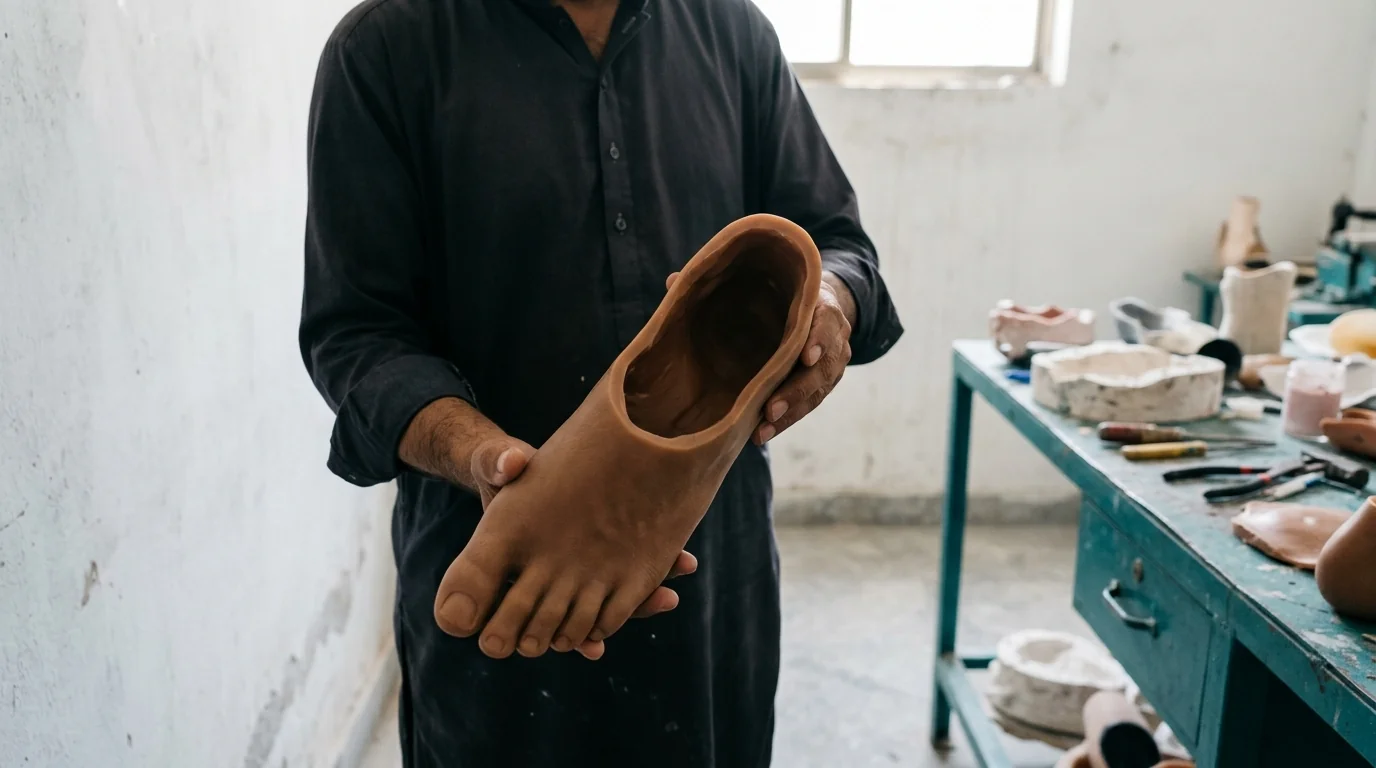
A soft silicone foot made over a cast of your foot and coloured to match your skin. It looks natural and spreads load.
Best forTransmetatarsal and larger forefoot losses, open sandals
FromPKR 25,000
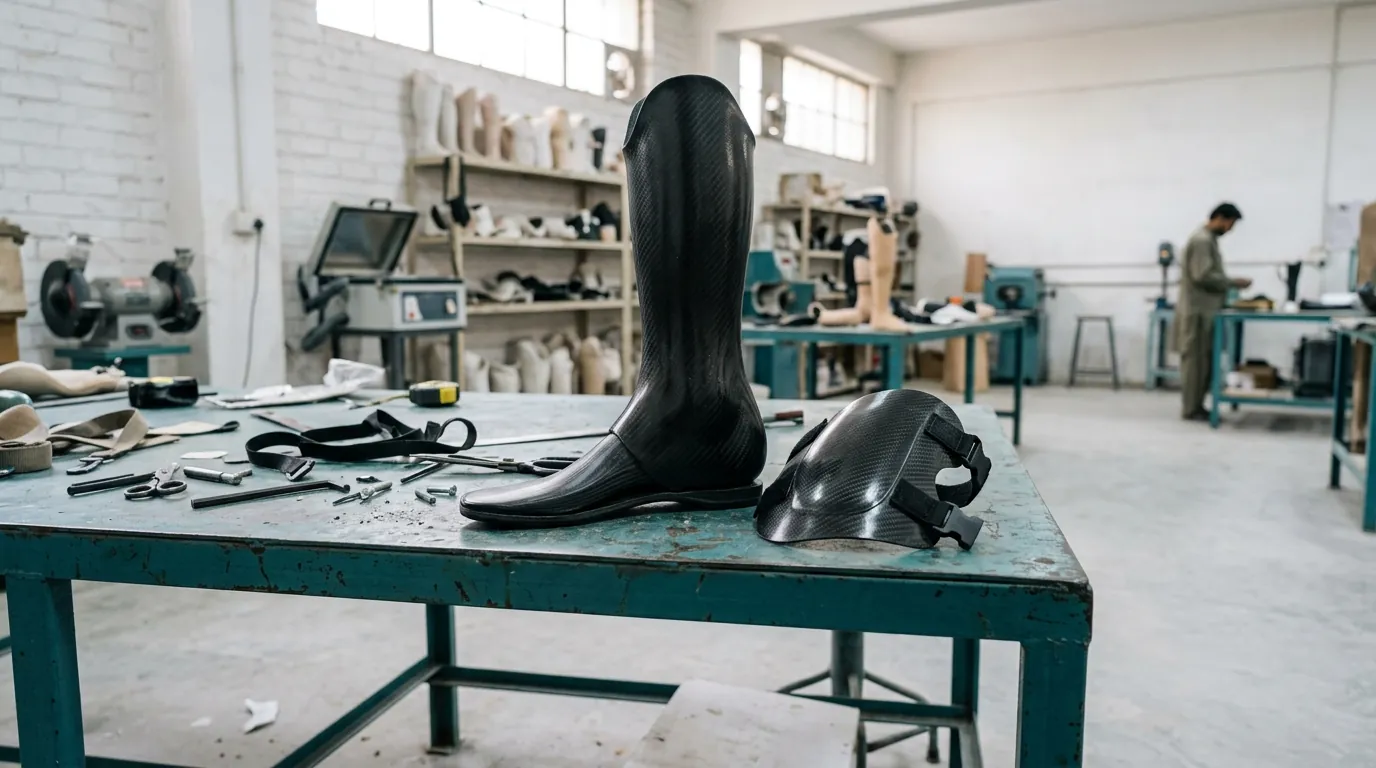
A socket with a removable window or a flexible liner, on a very low-profile foot made for the short space below the ankle.
Best forAnkle-level amputations with a healthy heel pad
FromPKR 110,000
Silicone colour matching and imported carbon footplates are the main costs at this level.
| Build | What it usually includes | Typical range (PKR) | From (US$) |
|---|---|---|---|
| Toe filler and insole | Moulded insole with a shaped filler | 10,000 to 25,000 | about 40 |
| Silicone partial foot | Cast, coloured silicone foot | 25,000 to 90,000 | about 90 |
| Partial foot with carbon footplate | Rigid footplate, filler and ankle support | 45,000 to 150,000 | about 160 |
| Syme's limb | Window or liner socket, low-profile foot | 110,000 to 450,000 | about 400 |
Shoes are not included; we tell you which kind to buy. Converted at about PKR 278 to the US dollar, October 2026.
See every priceThese fittings are shorter than full legs, usually one to two weeks of clinic visits.
Photograph both feet from above and below, and the shoes you wear most.
We check the skin, feeling, pulses and pressure areas on both feet, not only the affected one.
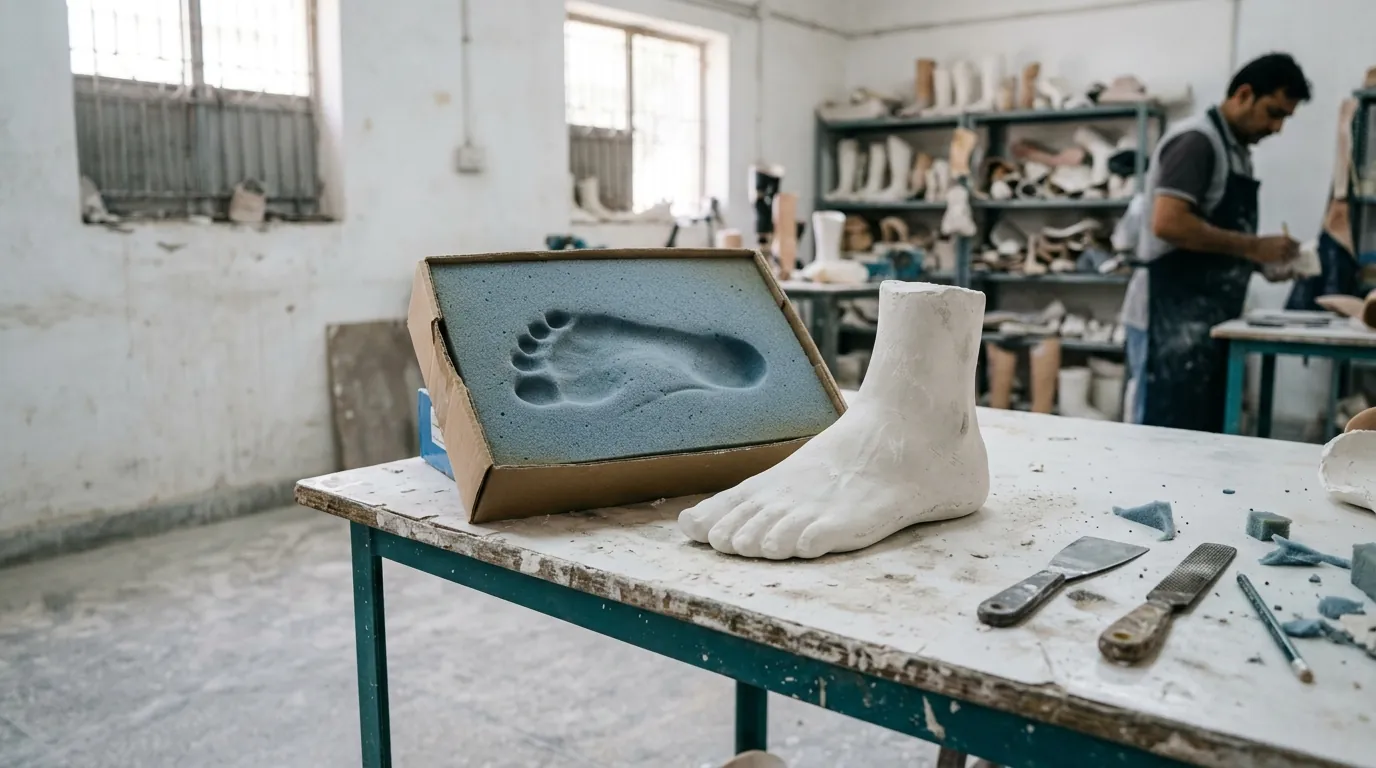
A cast or a foam impression records the exact shape of the foot.
You walk on the clinic floor in the shoes you will use, and we adjust the filler or the socket.
Silicone is tinted to match your skin, and edges are thinned so they do not catch.
A final walk, a skin check, and a written note of the shoe type and size to look for.
If the foot is numb from diabetes, we check the skin together after the first walks, because you may not feel a sore starting.
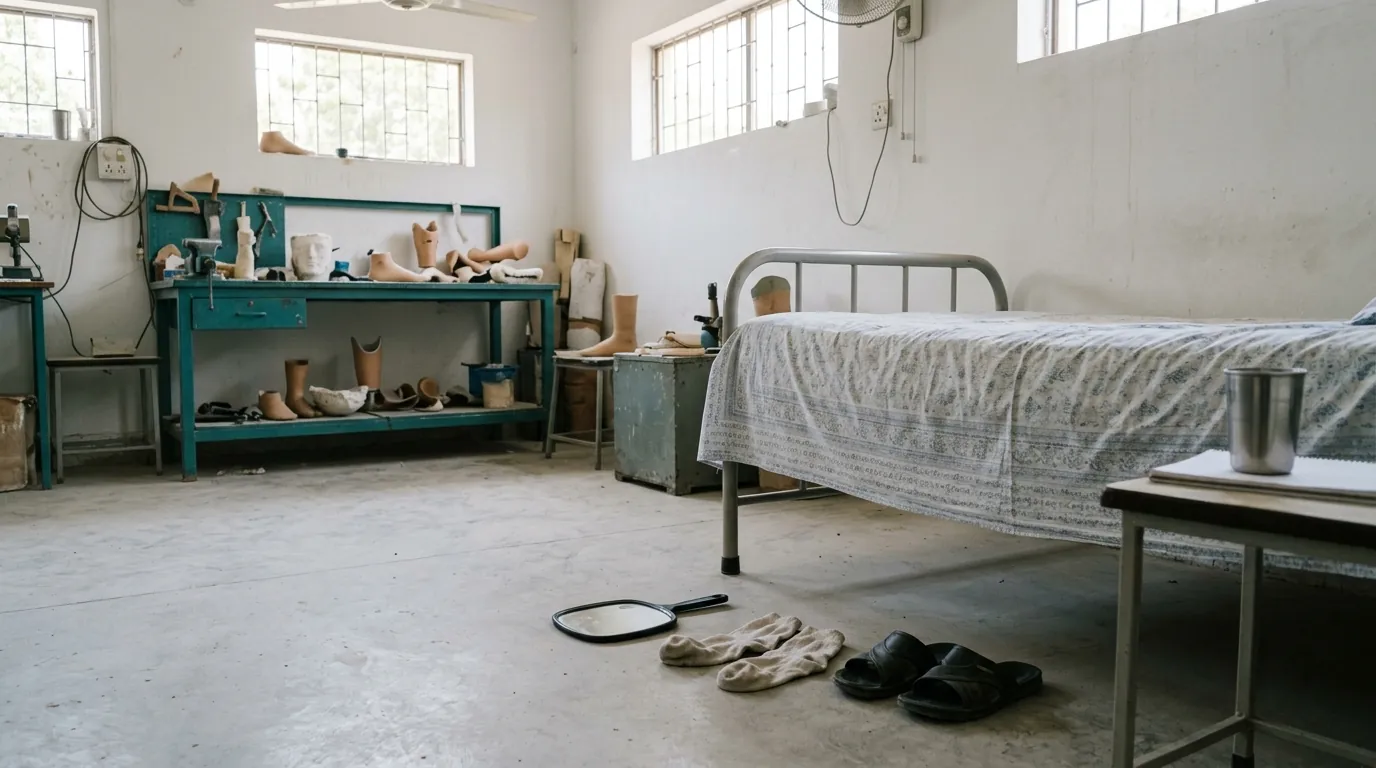
For diabetic users the partial foot is only half the job. The other foot now carries more load, and numb skin hides damage. Look at both feet every day, with a mirror or a family member if needed.
Wash and dry a silicone partial foot each evening, and keep it away from heaters and direct sun, which can harden silicone over time.
Shoes matter more than the device. A deep, wide shoe with a firm heel and no seams over scars will protect the foot far longer than any filler squeezed into a tight shoe.
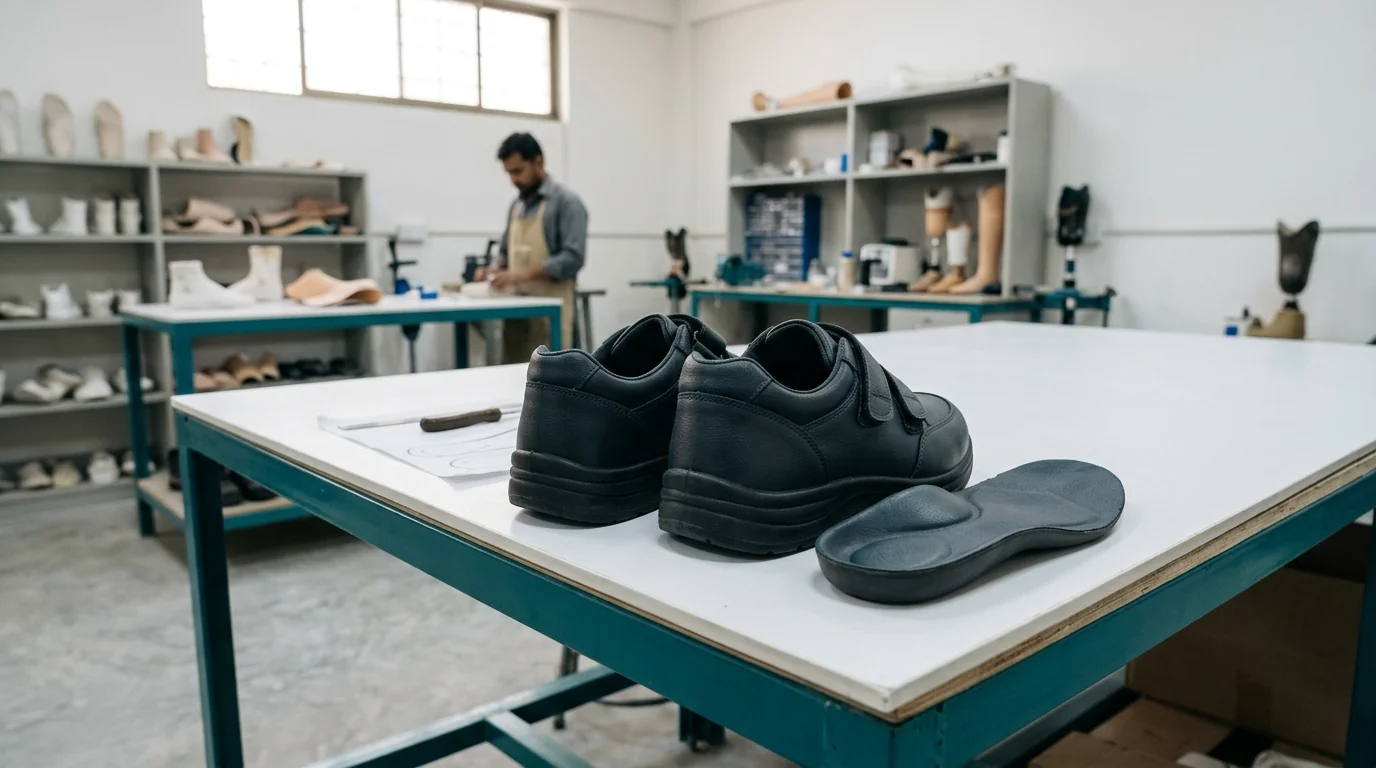
Often, yes, especially with a toe filler or a thin silicone foot. Larger losses may need a deeper or wider shoe, and we will tell you which kind works before you buy.
Because the end of the limb keeps the heel pad and the ends of the leg bones, which are wider than the ankle above them. The socket has to pass over that bulb, so it is shaped wider there.
Silicone does not absorb water, so it can be washed. It should still be dried afterwards, and the skin underneath must be dried too.
Redness, swelling, warmth or a dark patch on either foot, and any wound that does not improve within a few days. Those need your doctor quickly, and we can check whether the filler or the shoe is the cause.
Photograph both feet from above and below, plus the shoes you wear most. We will reply with what you are likely to need and what it costs.