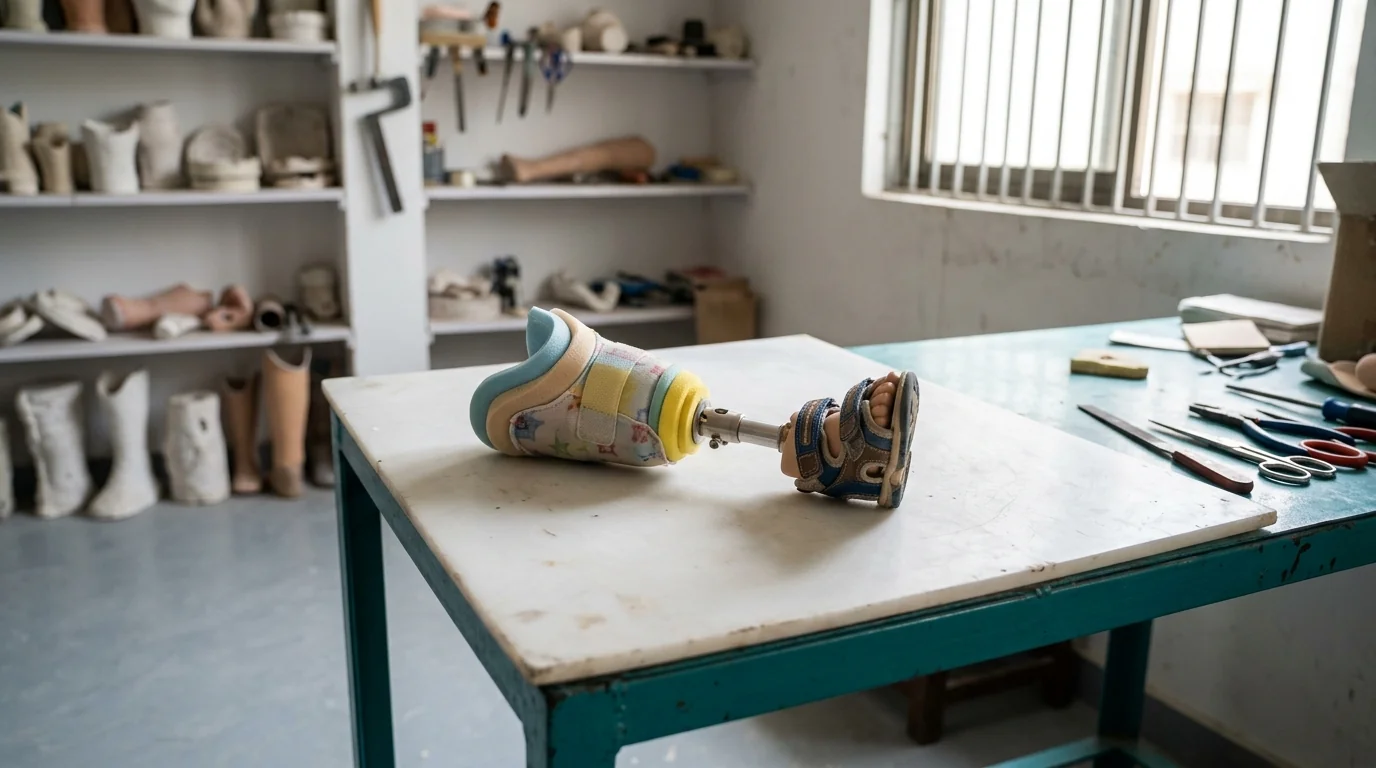
A first leg
A very light leg with a simple foot, often without a knee joint at first for above-knee children, so standing is steady.
Best forToddlers pulling up to stand and taking first steps
FromPKR 45,000
Paediatric prostheses
Children need limbs that keep up with growth, play and school. We build light, simple prostheses that are easy to adjust, and plan socket changes with parents so the child is never left with a leg that no longer fits.
At a glance
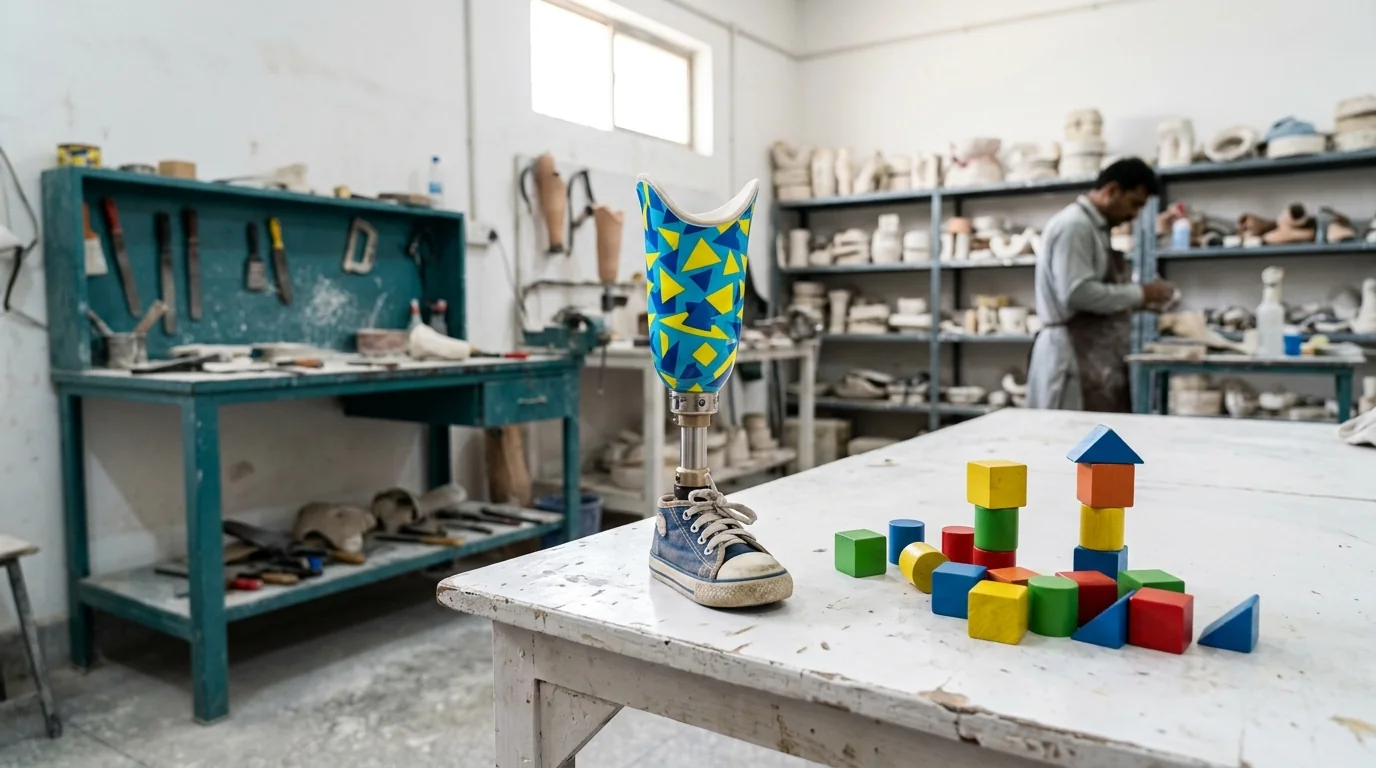
A toddler's first leg starts from PKR 45,000 (about US$160). Legs for older children usually cost PKR 60,000 to 200,000 below the knee and more above it. Because children grow, plan for a new socket roughly once a year, which costs less than a whole new leg.
Written and checked by the clinical team at Prosthetic Professionals. Last reviewed October 2026. General information only; your own surgeon or doctor decides when a limb is ready for fitting.
Some children are born with a short or missing limb; others lose a limb in a road accident, a fall from a roof, machinery or a burn. Either way, the prosthesis has to grow with the child.
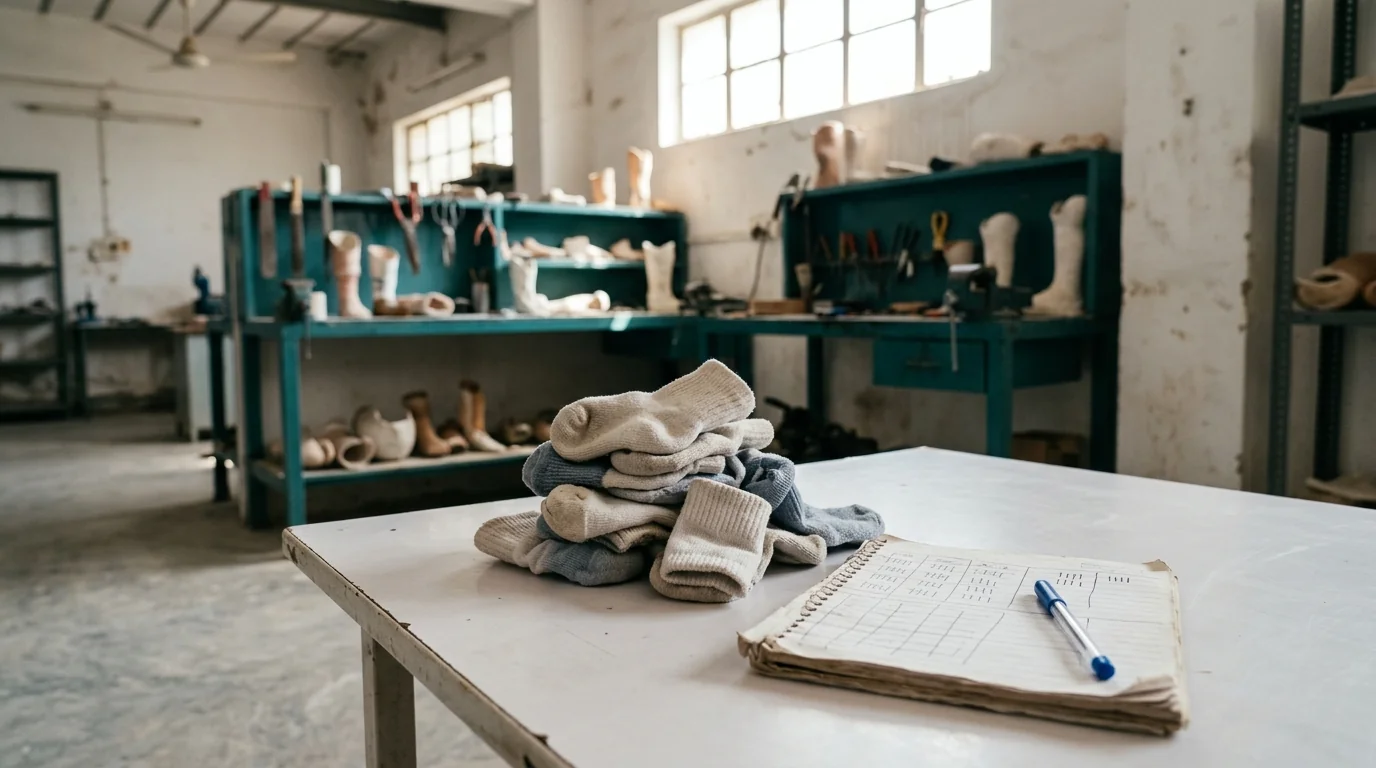
Children grow in bursts. A socket that fits in January may be tight by the summer holidays. We choose parts that can be lengthened and sockets with room for extra socks, so small changes can be made without a whole new leg.
For babies born without part of a leg, the first leg usually comes when they start pulling up to stand. It gives them two feet to stand on while their balance develops, the same age other children start to cruise along the furniture.
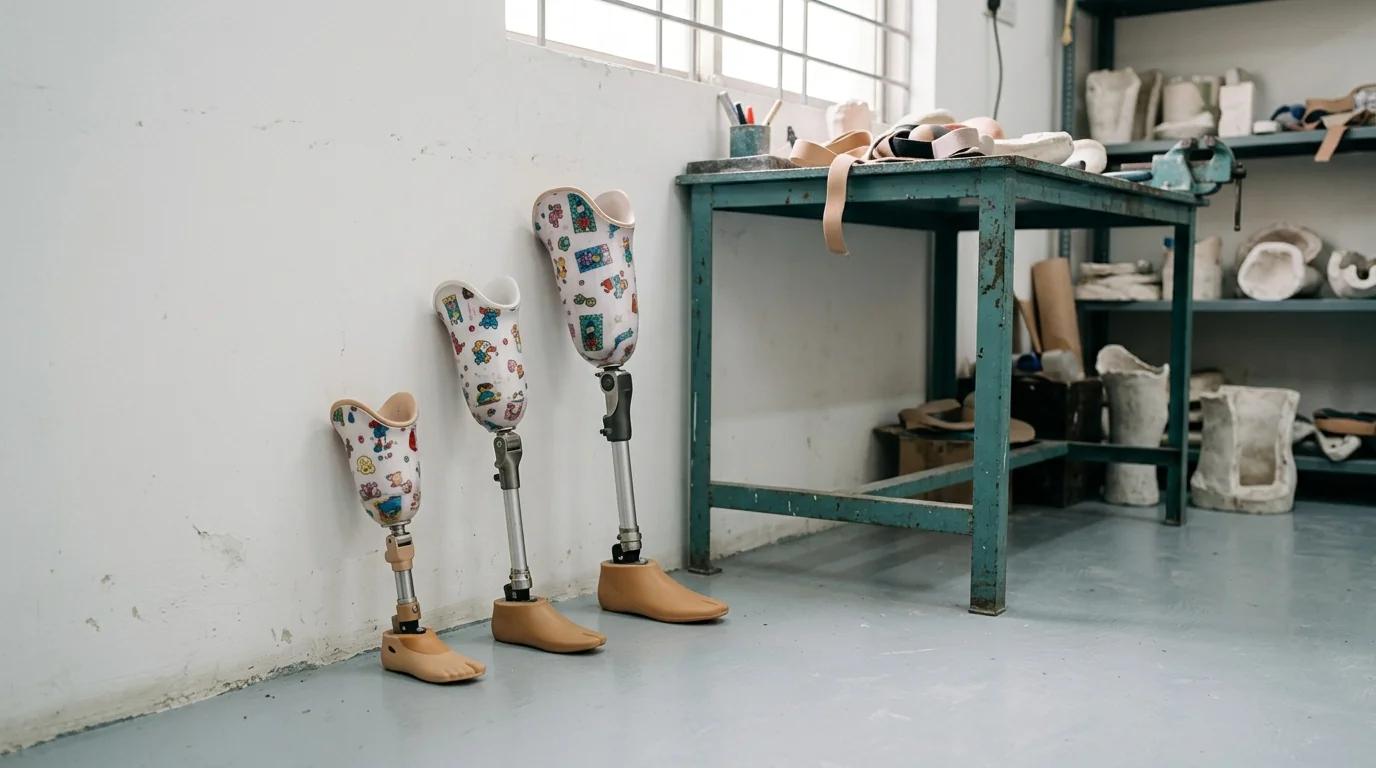
Light, simple and easy to adjust, so the child keeps moving while growing.
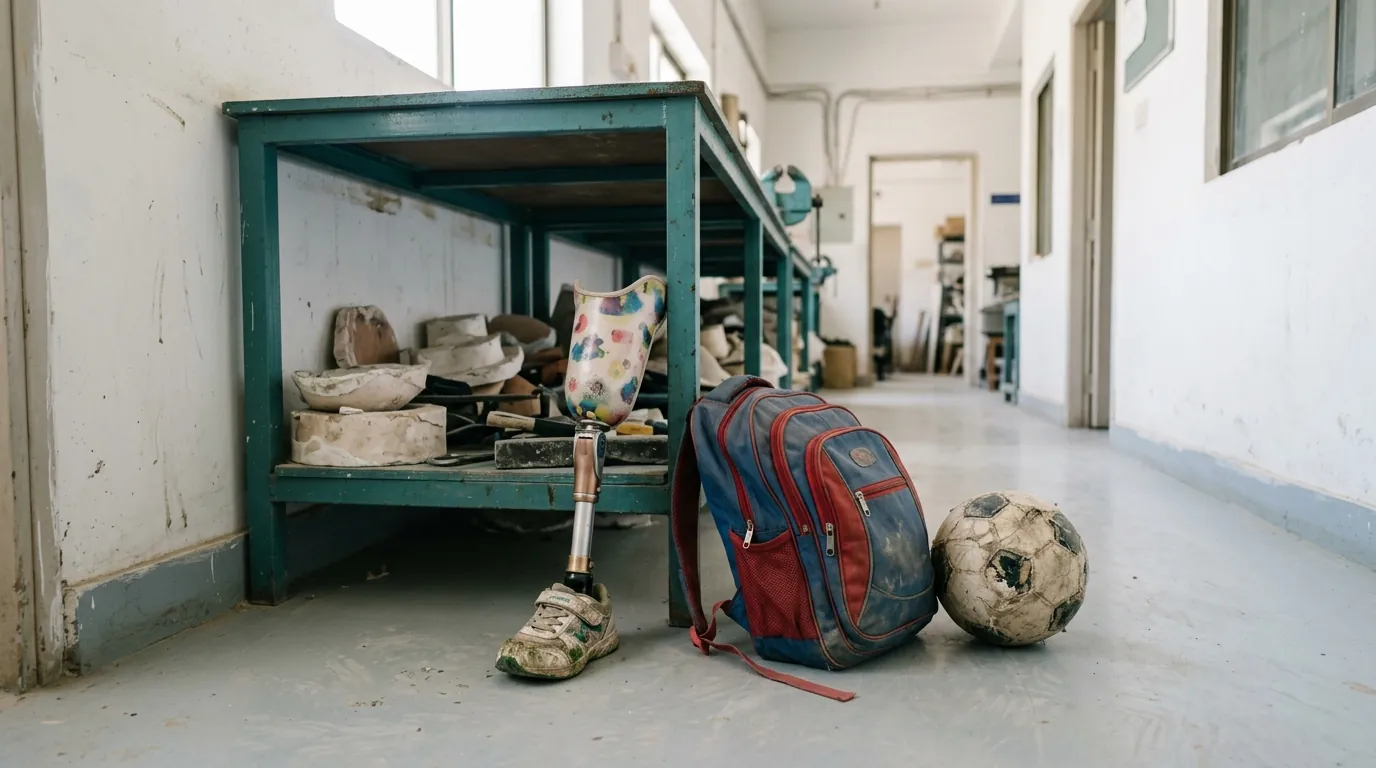
A very light leg with a simple foot, often without a knee joint at first for above-knee children, so standing is steady.
Best forToddlers pulling up to stand and taking first steps
FromPKR 45,000
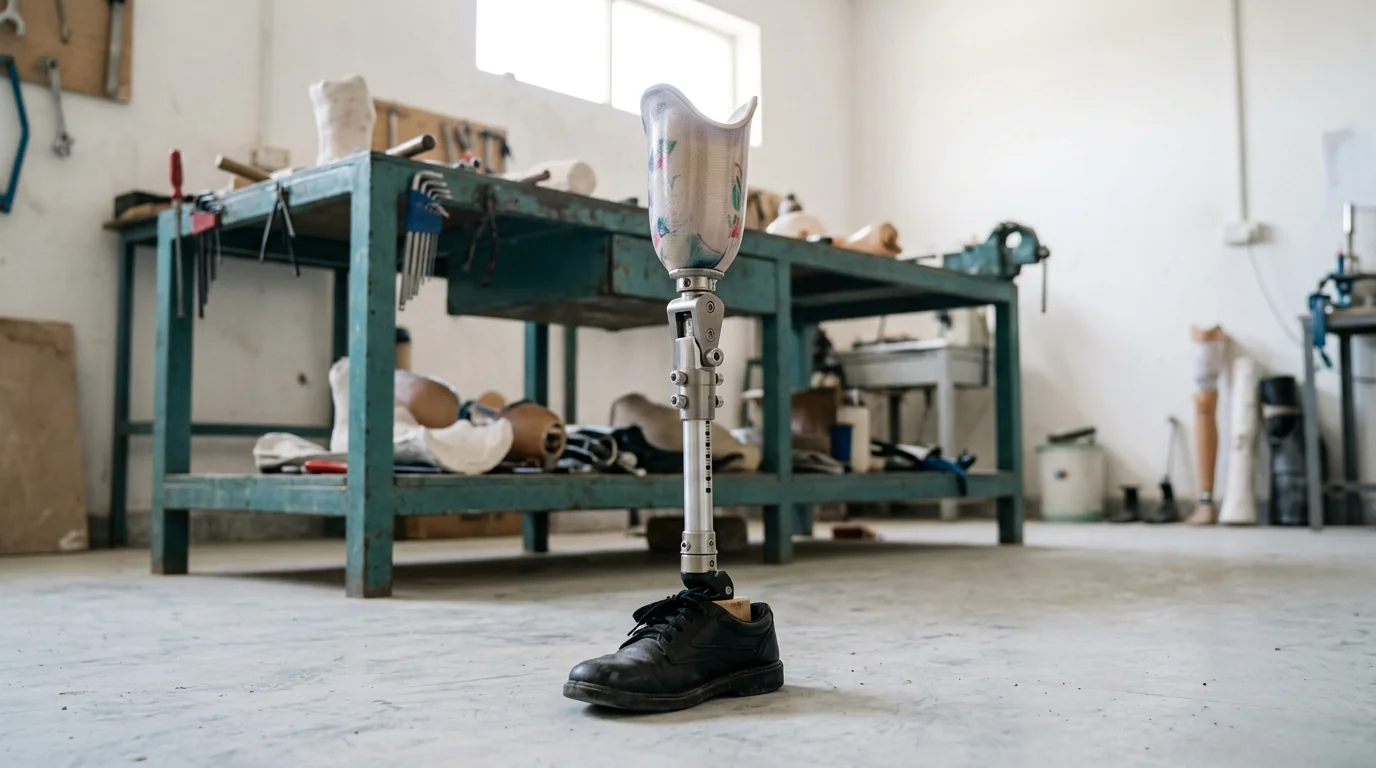
Adjustable pylons, sockets with room for socks and feet chosen for running about, with a knee joint when the child is ready.
Best forSchool-age children who run, climb and play sport
FromPKR 60,000
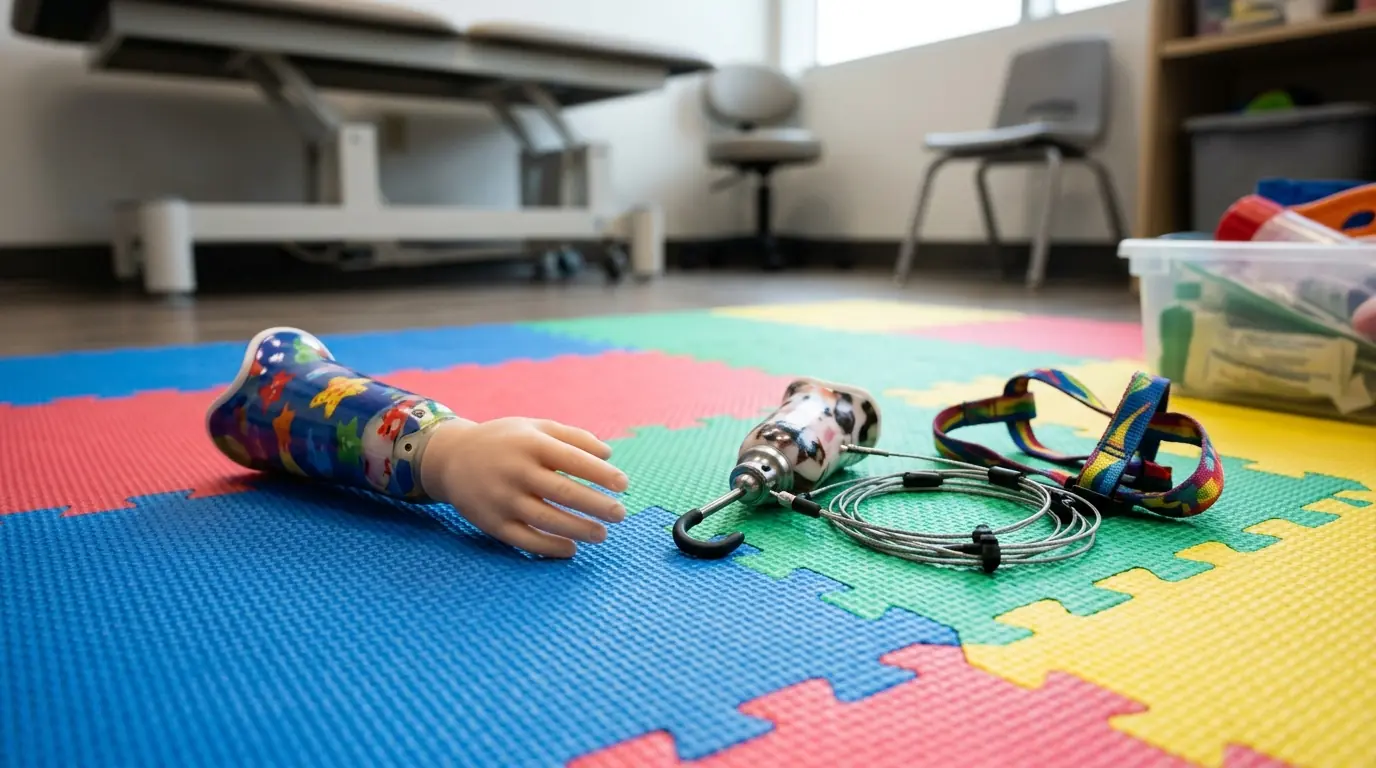
Light passive hands for babies to balance and crawl, then hooks or simple hands for holding toys, crayons and handlebars.
Best forBabies and children missing part of an arm or hand
FromPKR 40,000
Growth changes are part of the plan, so we set out both the first fitting and the likely follow-ups.
| Build | What it usually includes | Typical range (PKR) | From (US$) |
|---|---|---|---|
| Toddler's first leg | Light socket, pylon, simple foot | 45,000 to 120,000 | about 160 |
| Child's below-knee leg | Cast socket with growth room, adjustable pylon, dynamic foot | 60,000 to 200,000 | about 220 |
| Child's above-knee leg | Socket, child-sized knee when ready, foot | 90,000 to 300,000 | about 320 |
| Child's arm or hand | Passive hand or hook, light socket | 40,000 to 150,000 | about 140 |
| Socket change for growth | New socket, existing parts reused where possible | 30,000 to 70,000 | about 110 |
Most growth changes need a new socket only, not a new leg. Converted at about PKR 278 to the US dollar, October 2026.
See every priceShort sessions and lots of play. Children tire quickly, so we spread the work out.
Send photos of the limb and a short video of the child standing, crawling or walking.
We watch the child play, check the skin and the limb, and talk with parents about school and home.
Casting is done quickly, with toys and a parent close by, so the child stays calm.
The child stands and walks in a test socket while we watch for rubbing and red marks.
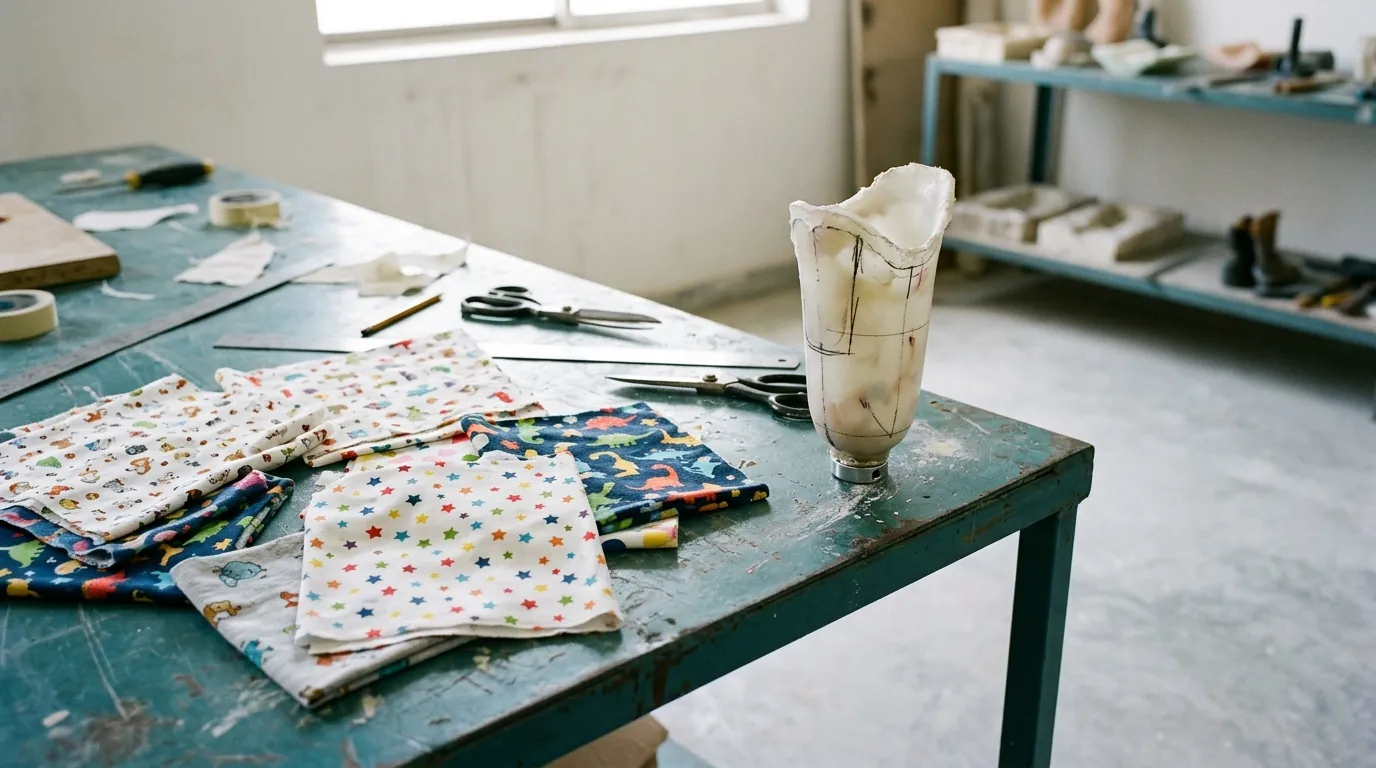
Older children can pick a colour or pattern for the socket, which helps many of them want to wear it.
Walking, steps, ball games and falling safely, with homework for parents.
Growth checks every few months catch a tight socket before it hurts. Families abroad can send photos between visits.
Children are hard on their limbs. Expect scuffed feet, loose straps and the odd crack. Most repairs are quick, and we would rather see a child running than sitting still to protect the leg.
Watch for the signs of growth: red marks that do not fade, the child taking the leg off more often, or needing fewer socks than before. Those mean the socket is getting tight.
Talk to the school before term starts. Teachers who know what to do if a leg comes loose, or when the skin is sore, make the day easier for everyone.
For babies born without part of a leg, usually when they begin pulling up to stand. After an amputation, once the wound has healed and the surgeon agrees. Earlier fitting helps a child build balance and confidence.
Most children need a new socket roughly once a year, and a whole new leg every few years, with more frequent changes during growth spurts. Adjustable parts let us lengthen the leg in between.
Yes, and we encourage it. A child who plays a lot may benefit from a sturdier foot, and older children can move on to a sports leg. Our sports page explains the options.
Yes. Families often plan a fitting around school holidays. We do the casting, test socket and final leg during the stay, and growth checks can be planned for the next visit, with photos in between.
A minute of video showing your child standing, crawling or walking tells us more than any description. WhatsApp it with photos of the limb and we will reply with a plan.